Knowing natural stone

One material, many stories

When we speak about natural stone, it is often perceived as a single material. In reality, it is a large family of very different rocks, formed through diverse geological processes over millions of years. Marble, granite, quartzite, travertine, onyx and limestone all belong to the broader category of natural stone, but they are not the same material. They have different geological origins, internal structures and technical characteristics that influence how they are used in architecture and interior design. Understanding these differences means learning how to read the material itself: why some stones are compact and resistant, others luminous or translucent, and others more porous or layered.

Geological origin and material identity

The differences between natural stones originate from the way they were formed. Some rocks derive from sedimentary processes, where mineral deposits accumulated and consolidated over time. This is the case with materials such as travertine or many limestones. Others are created through metamorphic processes, where existing rocks transform under pressure and heat. This includes materials such as marble and many quartzites.

There are also stones of magmatic origin, formed from the cooling of magma, such as granite. These processes determine the aesthetic appearance, structure, strength and workability of the stone. This is why we encounter such variety in architectural projects: compact or porous surfaces, delicate veining or crystalline structures, materials suited to cladding or kitchen countertops.

Rock types: Dolomite, Marble, Limestone, Quartzite

Credits: Lina Adi

From material to project

In contemporary design, natural stone is not simply an aesthetic choice. It is a material with its own identity, influencing how a space is perceived and experienced. Some stones are selected for their strength and durability, ideal for surfaces exposed to frequent use. Others for their luminosity or translucency, capable of transforming light. Others again for their structured materiality, introducing depth and rhythm into a space. For this reason, understanding natural stone also means choosing the most appropriate material for each project.

The main types of natural stone

Within the large family of natural stone we can distinguish several categories, each with its own characteristics.

Granite

A magmatic rock that is extremely compact and durable, characterised by a visible crystalline structure.
Learn more about granite

Quartzite

A metamorphic stone known for its strength and durability, often used for kitchen countertops.
Discover about quartzite

Dolomite

A carbonate rock with a compact structure and uniform appearance, in tones from white to grey. Valued for its balance between aesthetics and performance.
Discover about dolomite

Marble

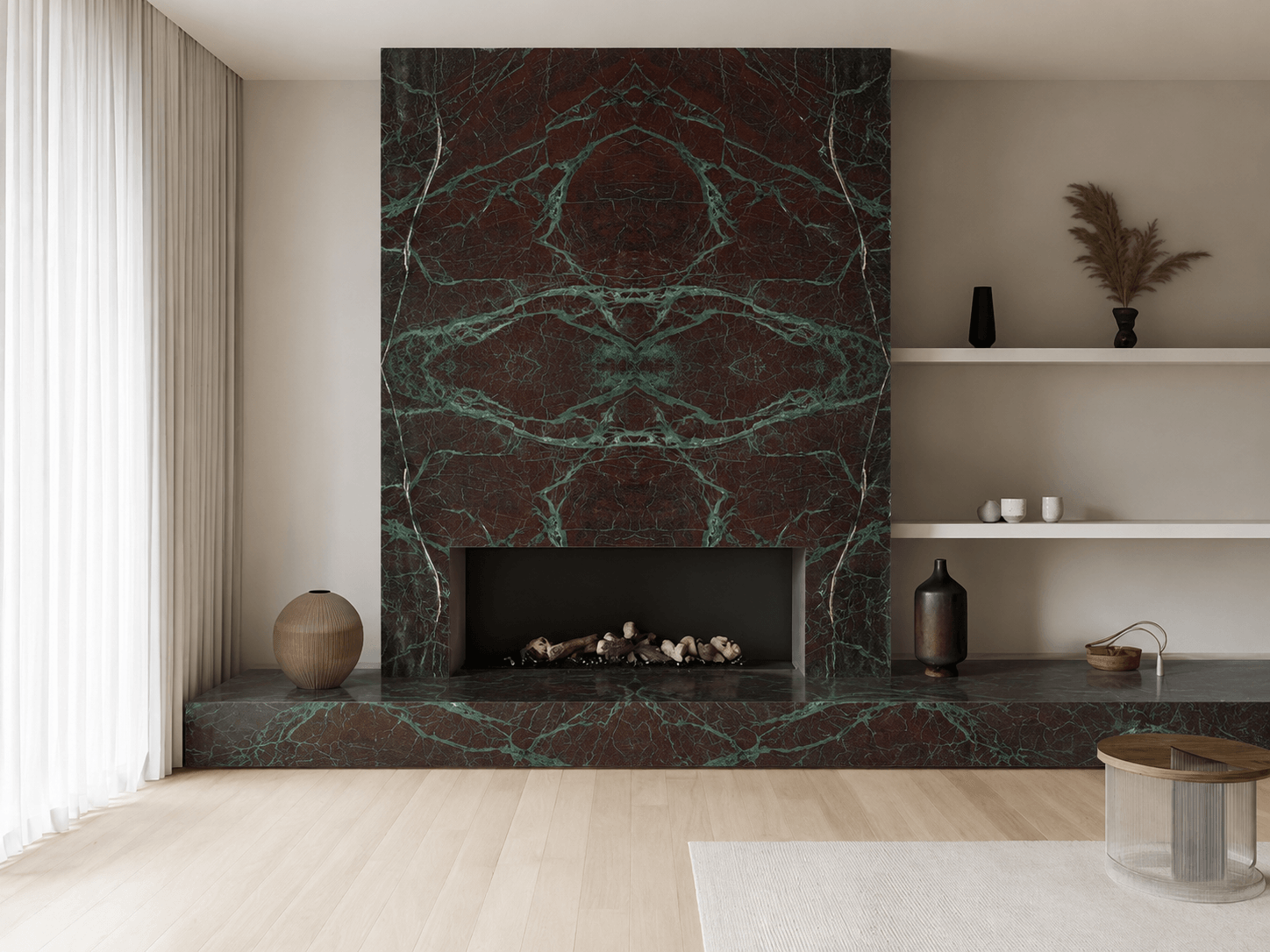
A metamorphic stone known for its elegance and the veining that runs through its surface. Used in architecture and design for centuries.
Discover the article about marble

Travertine

A sedimentary stone with a porous and layered character, historically used in Mediterranean architecture.
Read the article about travertine

Limestone

A compact limestone appreciated for its natural tones and balanced appearance.
Learn more about limestone

Onyx

A calcitic material known for its translucency and its ability to interact with light.
Discover about onyx

A material worth understanding

Natural stone is not a single material but an entire universe of different stones, each with its own geological history and aesthetic identity. Understanding these differences allows us to better appreciate the material and to use it more consciously in architecture and design.
This guide is a starting point: from here you can explore the different families of natural stone and discover the characteristics that make each material unique.