Open book: when natural stone becomes design

The hidden design within the material

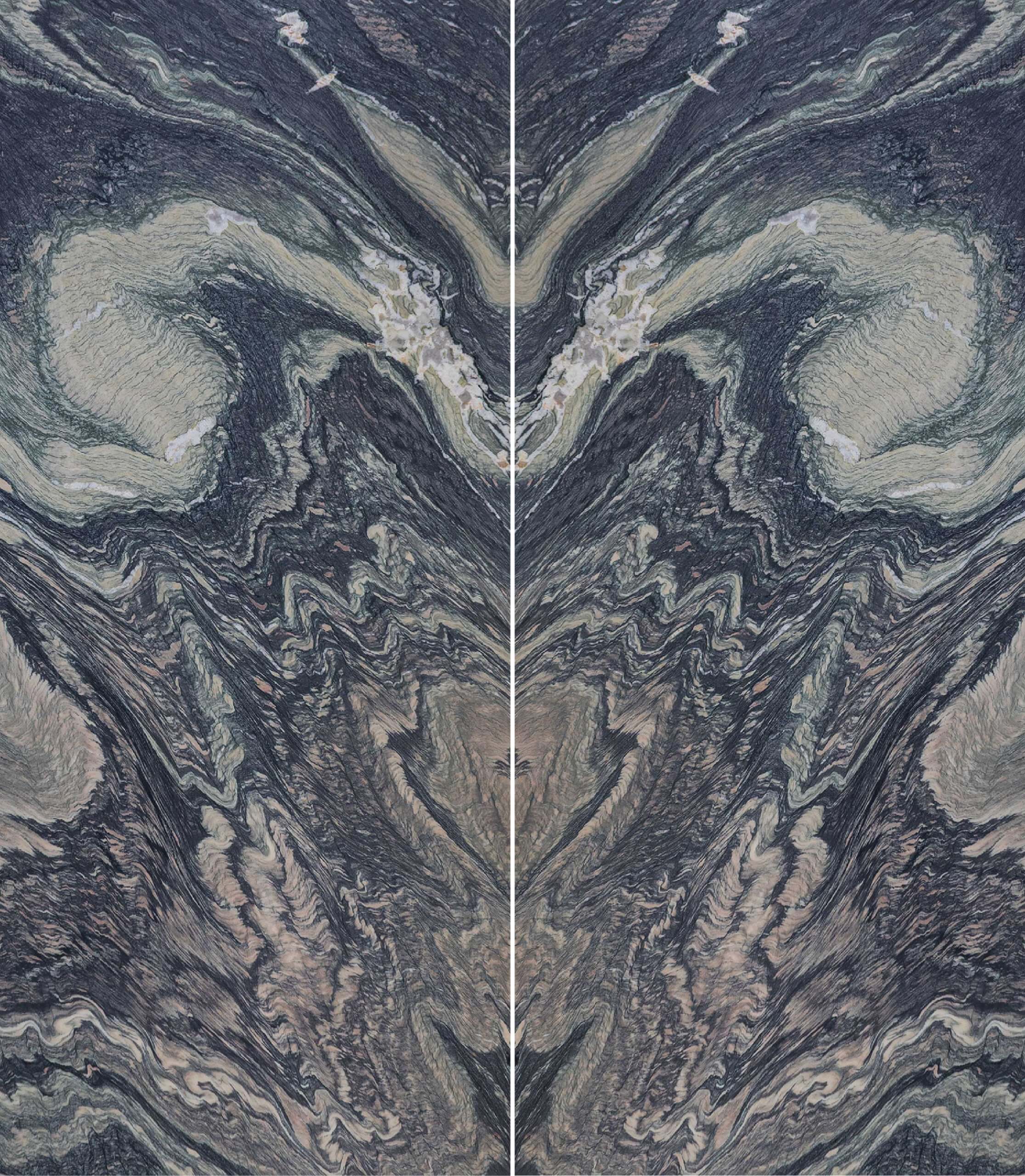
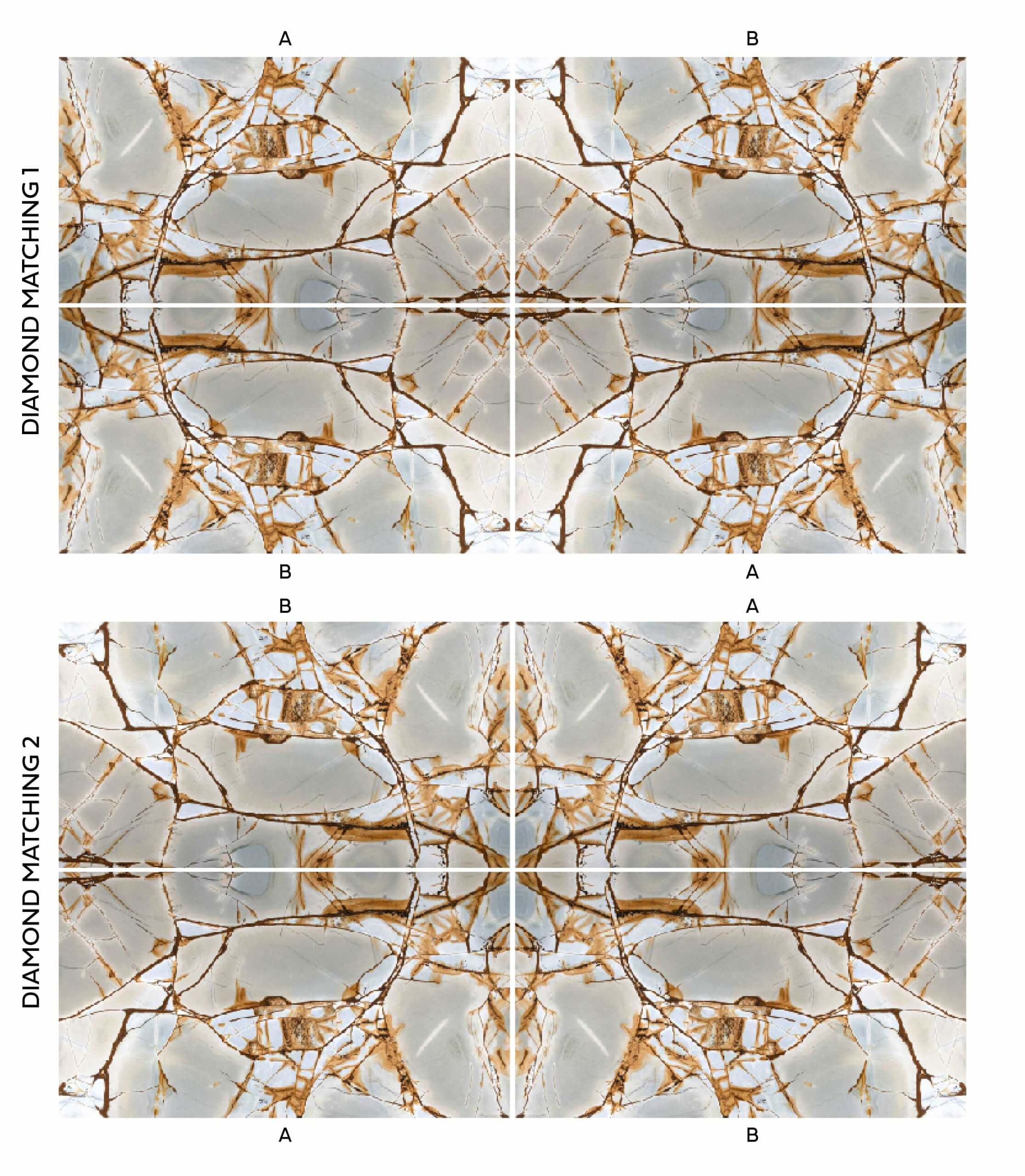
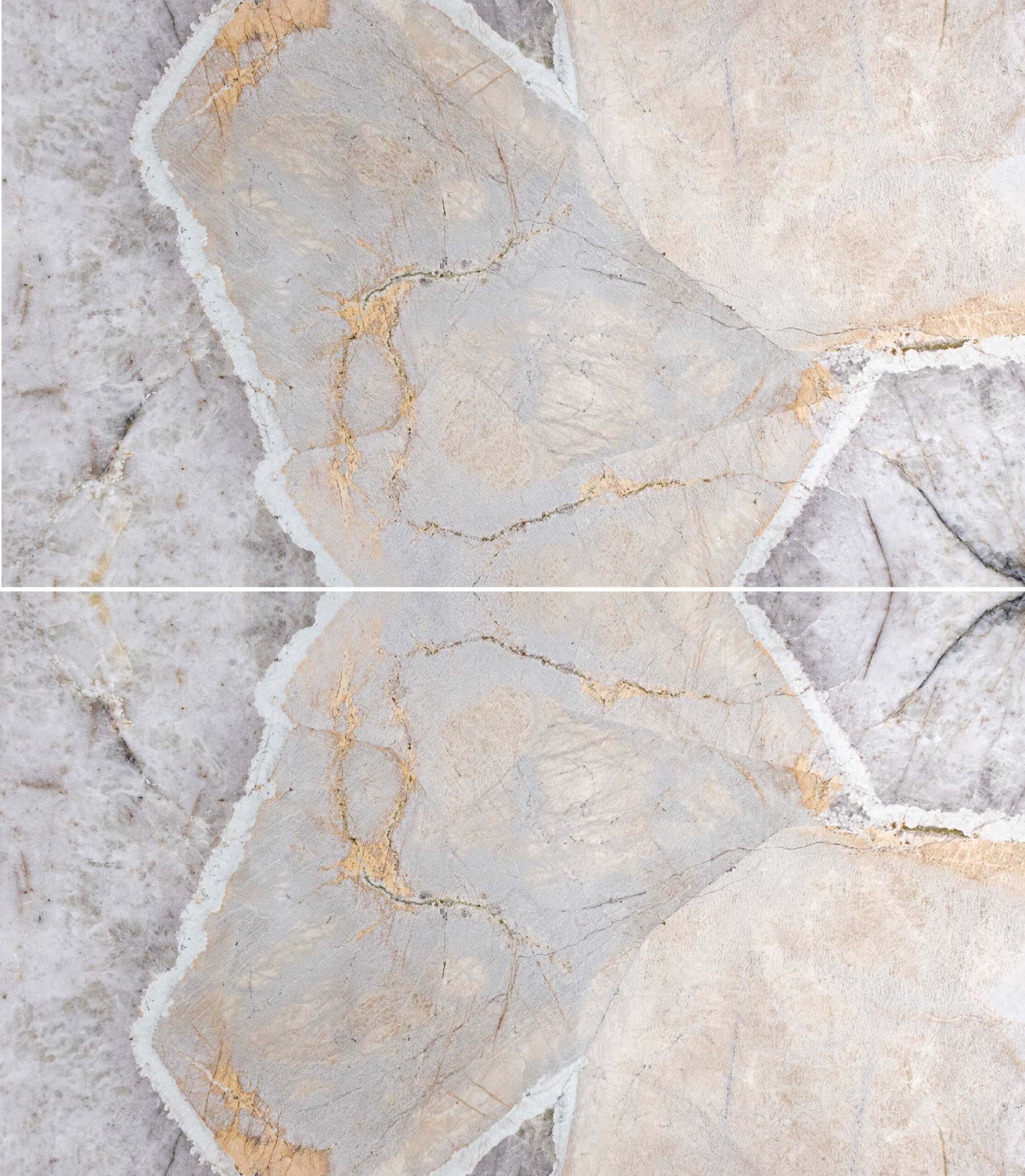
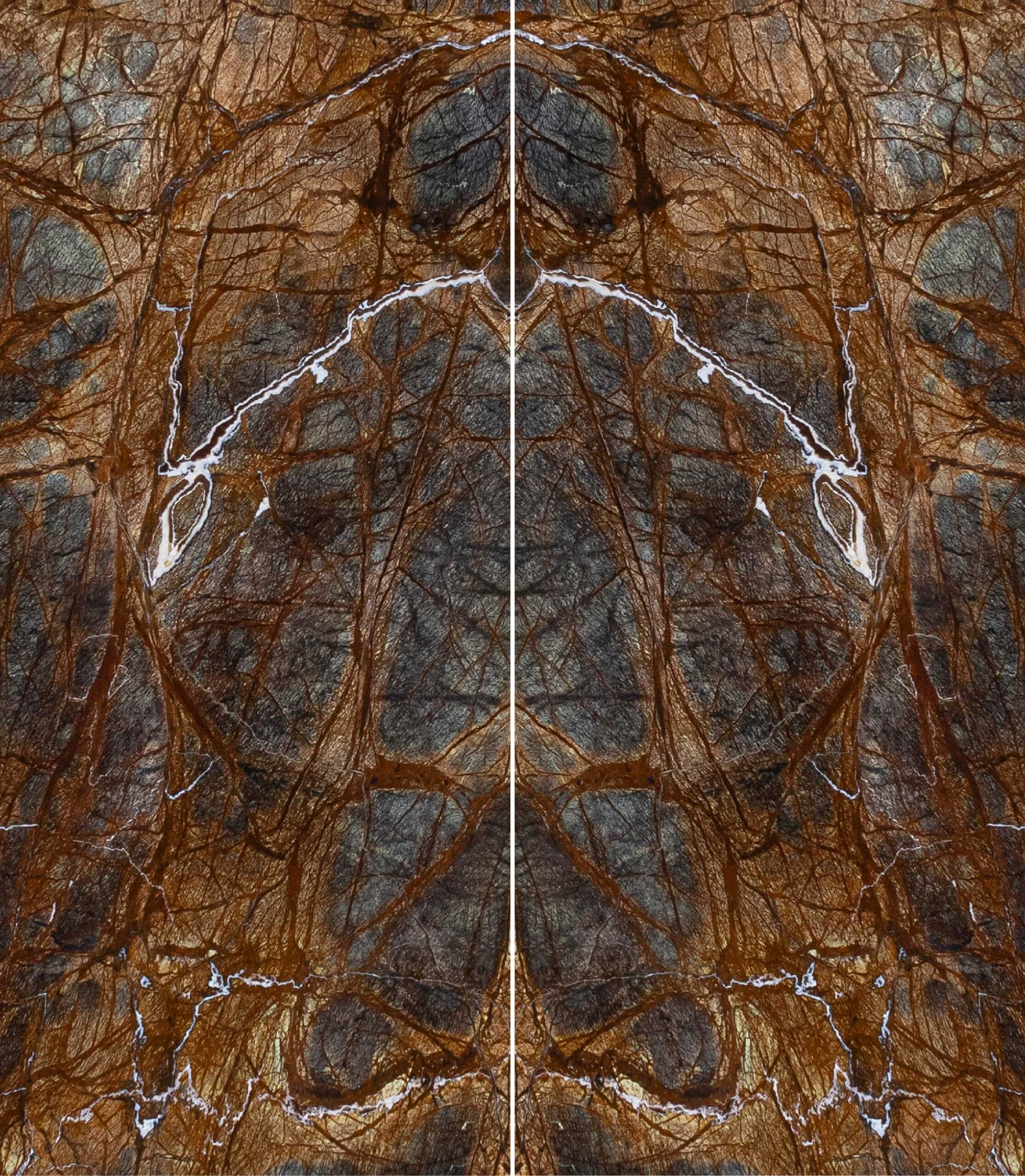
Open book is one of the most striking ways to enhance natural stone within a project. It is not simply a matter of placing several slabs side by side, but of reading the material, understanding its internal movement and transforming its veining into a continuous design. The term refers to a composition obtained by placing slabs cut in sequence from the same block next to each other and opening them like a book, so that the veins mirror one another. The result is a symmetrical, scenographic and deeply natural surface, where each composition remains unique and cannot be replicated in exactly the same way.
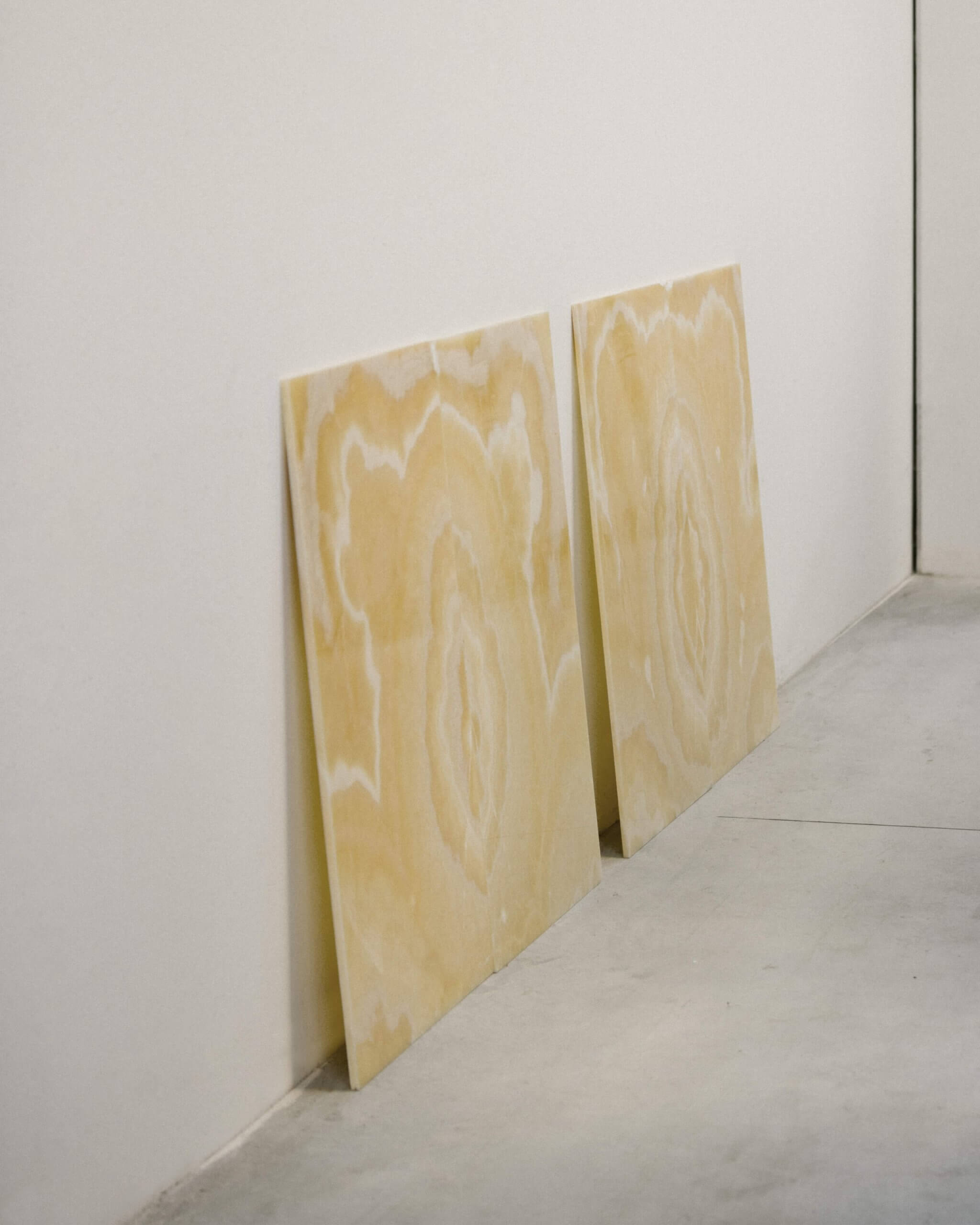
From slab to composition

The process begins with the selection of the material. To create an effective bookmatch composition, the stone must feature expressive veining, contrasts and movement. Once the block has been selected, the slabs are cut in sequence and kept in the correct processing order. This step is essential to ensure visual continuity and allow the mirrored arrangement.

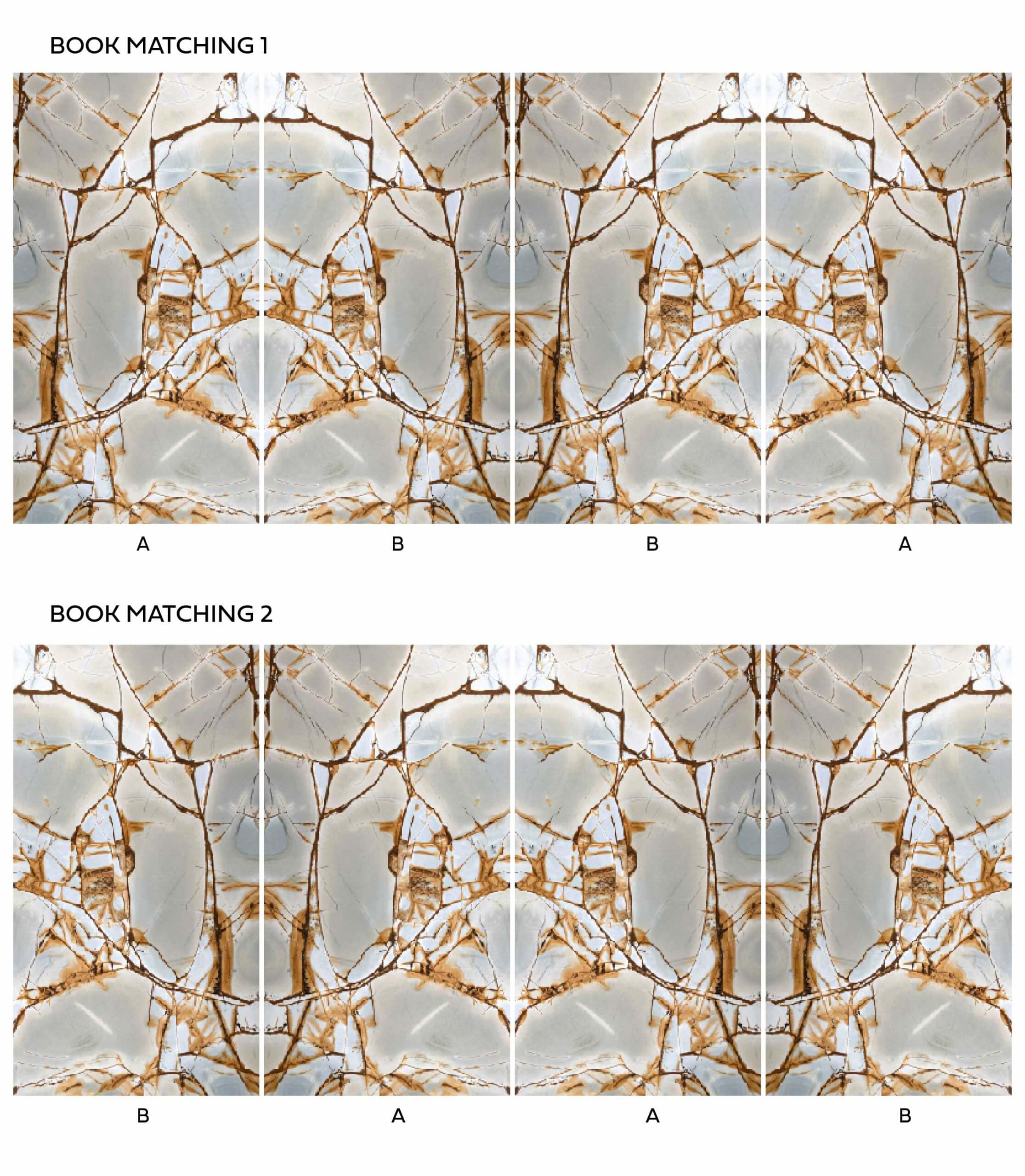
The layout is then studied according to the project, choosing the composition that best suits the space: regular, dynamic, graphic or soft. By changing the arrangement and the axes of symmetry, the same slabs can generate multiple patterns.

Alternative bookmatch compositions with Blue Roma quartzite

Pre-laying and installation: precision and continuity

Before the final installation, pre-laying makes it possible to verify the alignment of the veins, the continuity of the design and the relationship between the composition and the real dimensions of the space. At this stage, cuts, joints, openings, heights and critical points are checked.
The installation requires the same level of attention. An open book composition works when the design remains clear and harmonious once inserted into the space. The slabs must follow the established order, and every detail must respect the logic of the composition.

The most suitable materials

The most suitable materials for open book compositions are those with marked veining, broad movements and a strong graphic identity. Marbles, quartzites, dolomites and other natural stones with expressive patterns can offer particularly interesting results. Light-coloured materials with defined veining create elegant and luminous compositions, ideal for walls, bathrooms or large vertical surfaces. Dark or highly contrasted stones, on the other hand, generate more scenographic and deep effects, capable of becoming the visual focus of a space.

Cipollino, Patagonia, Rain Forest

Enhancing spaces with open book compositions

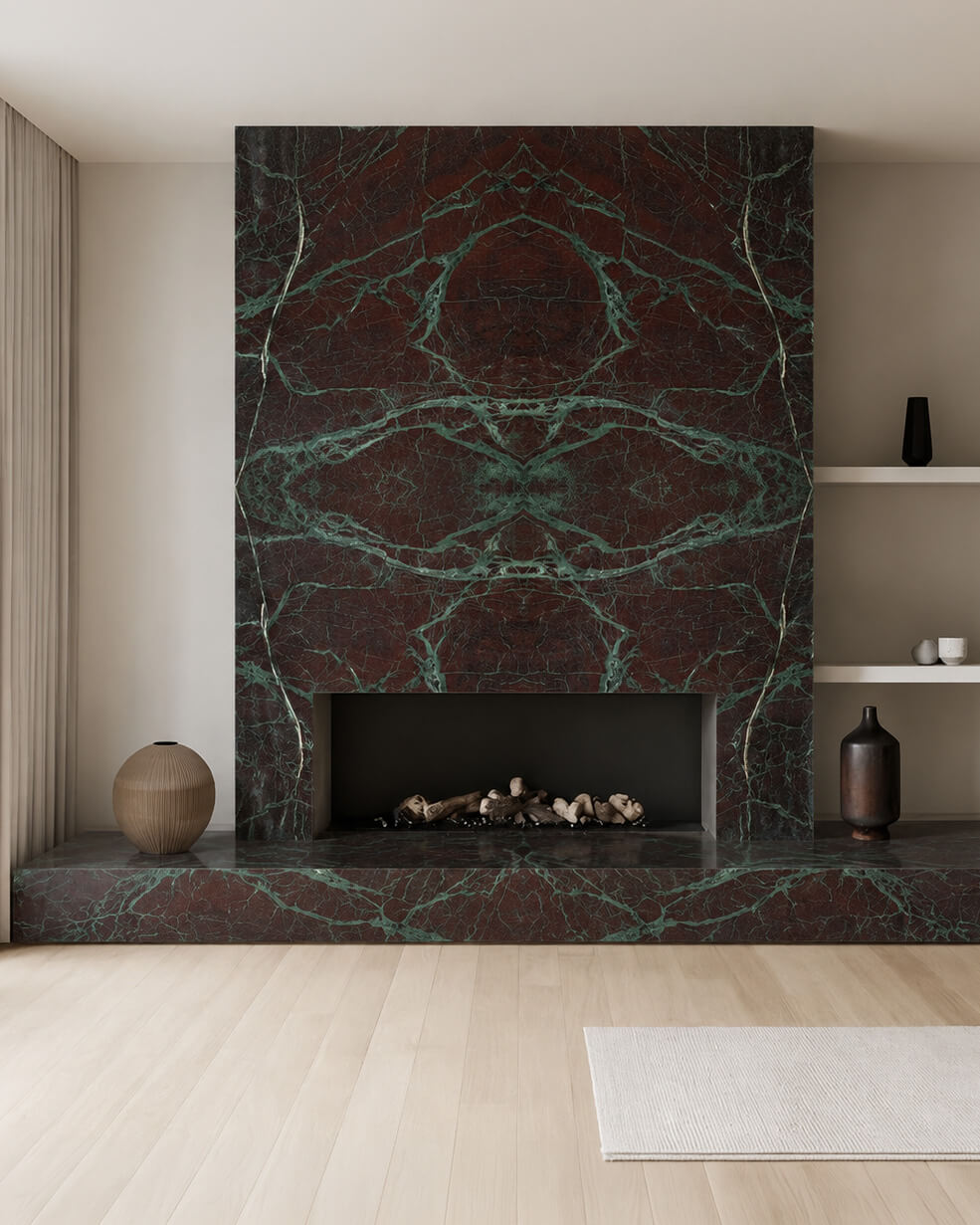
An open book composition transforms a surface into a narrative element. A wall, a shower cladding, a fireplace or a large cladding surface becomes a place where stone reveals all its visual depth.
Its value does not lie only in its scenic effect, but in its ability to build a direct relationship between material and space. The symmetry of the veining creates rhythm, guides the eye and introduces a sense of natural order, while preserving the spontaneity and uniqueness of the stone.

A design choice, not just a decorative one

Choosing an open book composition means going beyond the idea of stone as a simple cladding material. It means considering it as a material to be read, composed and enhanced. Every slab contains a potential design. Open book composition makes it visible, expands it and transforms it into architecture. It does not add decoration to the material, but reveals what the material already contains.