Knowing Granite

Granite: a stone solid by nature

Granite is one of the most recognised and widely used natural stones in the world, valued for its strength, durability and broad aesthetic range. Formed through the slow cooling of magma deep within the Earth, it combines geological power with crystalline beauty, resulting in a versatile material suited to both technical and decorative applications. Understanding granite means exploring its origins, its characteristics and the many design opportunities it brings to contemporary interiors.

Pannonia Grun, Taurus Black, Cobra Gold, Viscont White

Origin and identity of the material

Granite is an intrusive igneous rock formed by the slow cooling of magma deep within the Earth’s crust. This process creates a compact, uniform and highly resistant stone, characterised by visible grain and a high concentration of crystals. The main quarrying regions are Brazil, India, Scandinavia, Africa and China, each offering granites with very different colours and structures.
Considered one of the most reliable natural stones in terms of performance and durability, granite is highly appreciated in contemporary interior design thanks to its balance between technical strength and aesthetic quality.

Morphological and mineralogical characteristics

Granite is composed mainly of quartz, feldspar and mica minerals that give it high hardness and its distinctive crystalline grain structure. Its texture is generally homogeneous, with variations related to the distribution and size of the crystals: some granites present compact, regular patterns, while others display more pronounced chromatic movements.
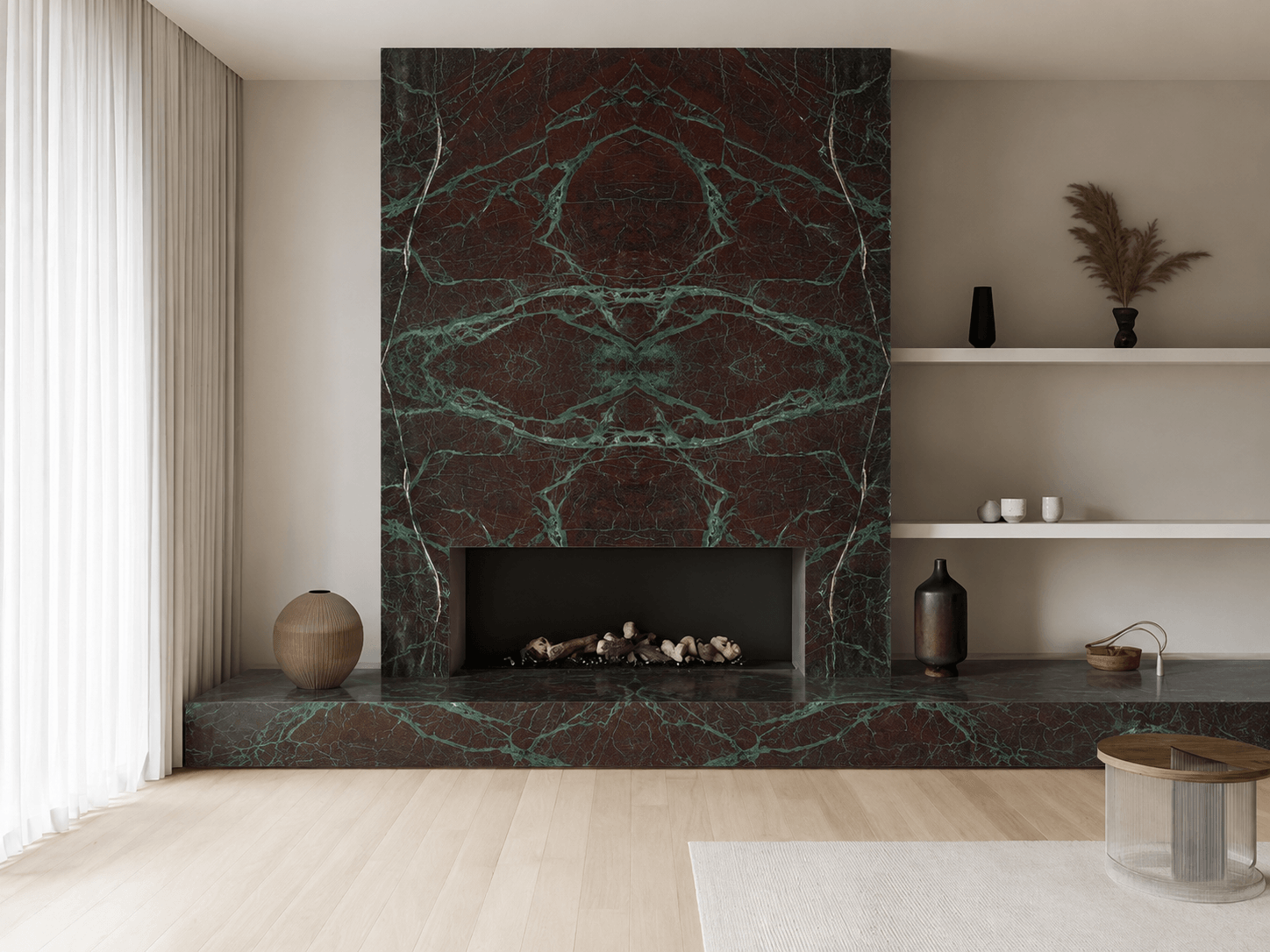
The term granite is often used generically to group materials that share similar technical characteristics and workability. The colour range is extremely broad: from greys and blacks such as Nero Assoluto or Steel Grey, to warm tones like Cobra Gold, and the red shades of materials such as Multicolor Red. More expressive varieties are also common, including green and blue stones such as Labradorite or Verde Fusion.
This natural richness makes granite an extremely versatile stone, suitable for both technical and decorative applications.

Source: Pinterest – copyright belongs to the respective authors.

Technical properties and applications

Granite is a very hard and resistant natural stone, offering high mechanical strength, heat stability and low porosity. These characteristics make it particularly suitable for long-lasting applications such as kitchen countertops, high-traffic flooring, staircases, interior cladding and certain outdoor uses.
Unlike more delicate materials, granite has low sensitivity to scratches, good resistance to common household chemicals, and maintains its colour integrity over time. Its processing is generally easier than that of extremely hard stones such as some quartzites, but still requires diamond tools to ensure precision and cutting quality.

Maintenance and recommendations

Granite is easy to maintain thanks to its low porosity and surface resistance. For daily cleaning, neutral detergents are recommended while avoiding aggressive or acidic products. For some lighter varieties, applying a water- and oil-repellent treatment can be useful to reduce absorption of oils and pigmented liquids particularly for kitchen countertops.
Proper maintenance helps preserve the shine of the polish and ensures the long-term aesthetic and functional performance of the material. For more information on treatments and practical solutions, consult the guides dedicated to stain removal guide and natural stone tratments.

Credits: Matteo Bianchessi

The character of the stone

Granite is a natural stone that combines stability, resistance and understated aesthetic elegance. It is the ideal choice for those seeking a solid, durable and uncompromising surface that fits effortlessly into both classic and contemporary spaces. Its crystalline structure and technical reliability make it a material capable of supporting any project with coherence and continuity, maintaining its value over time.