Knowing Onyx

Onyx is one of the most expressive and evocative natural stones. Appreciated for its translucency and its extraordinary chromatic depth, it is a material that goes beyond surface, becoming light, atmosphere and identity within a project. In this overview, we explore the origin, characteristics and applications of onyx, offering a clear framework to understand its nature, its potential and the care it requires.

Green Onyx, Pink Onyx, Yellow Onyx, White Onyx

Origin and identity of the material

Onyx is a natural sedimentary stone belonging to the family of alabastrine limestones. It forms through the slow and layered deposition of calcium carbonate in cavities, caves or hydrothermal environments, generating unique colour alternations and transparencies.
It is found mainly in Iran, Mexico, Pakistan, Turkey and Afghanistan, with varieties characterized by highly distinctive vivid and scenic colours. Onyx is considered a precious and decorative stone, widely used in projects that aim to emphasize the richness of the material and its ability to filter light thanks to its natural translucency.

Morphological and mineralogical characteristics

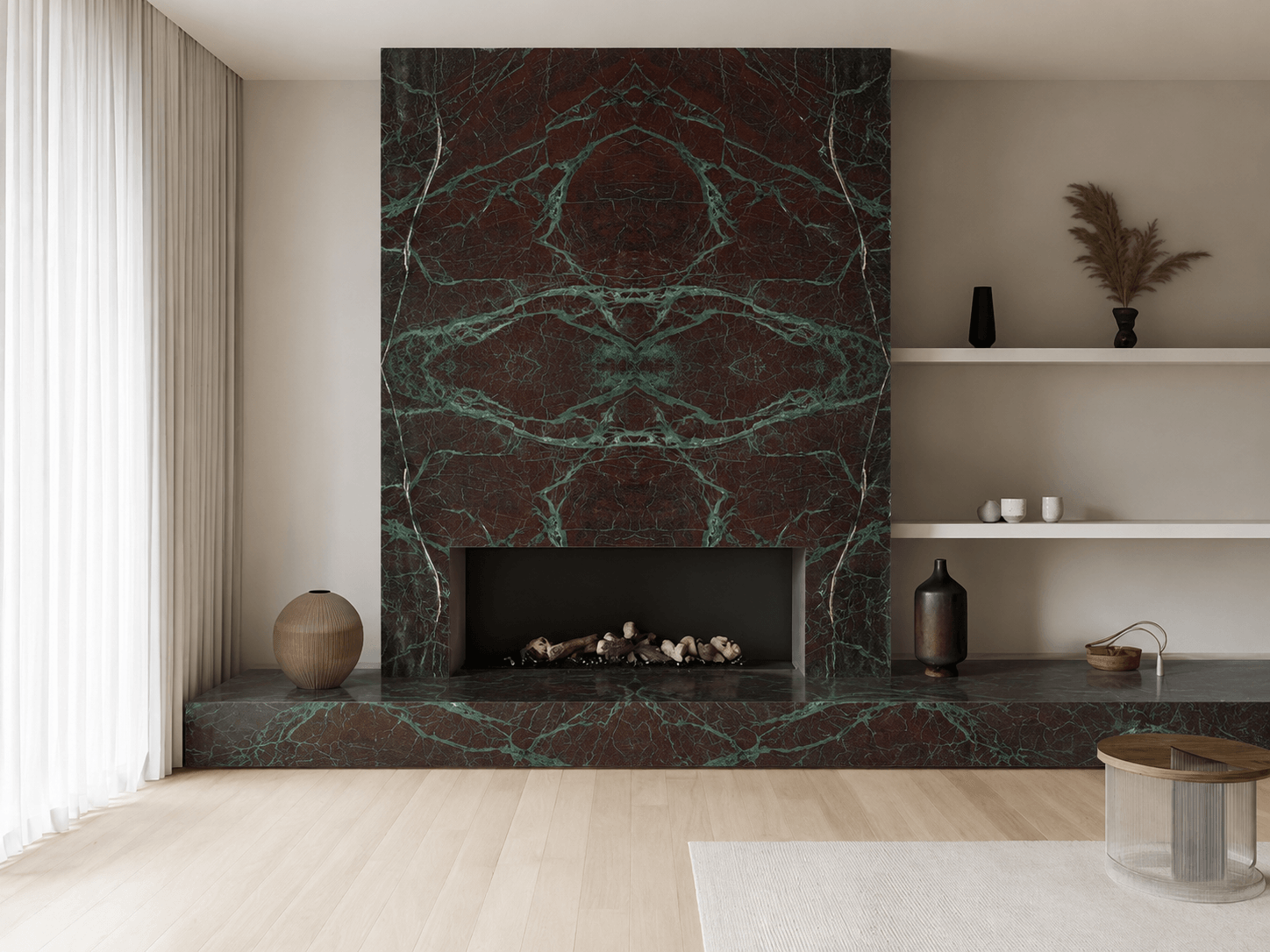
Onyx is composed predominantly of calcite arranged in parallel or wavy layers, responsible for the graphic patterns that make every slab a one-of-a-kind piece. Its translucency is one of its most distinctive features: some varieties can be backlit, producing scenographic light effects unattainable with other natural stones. The chromatic range is extremely wide: honey tones, greens, ambers, whites, reds and blacks alternate in linear, wavy or irregular patterns.
The structure can be more or less compact depending on origin, and some varieties display natural micro-fractures, often stabilized through specific resining processes. Onyx is a stone with a strong visual personality, chosen especially for its ability to transform surfaces and volumes into elements of remarkable aesthetic impact.

Credits: Oliver Jaist

Technical properties and applications

Onyx is a calcareous stone, soft and sensitive, with lower resistance to acids and scratches compared to materials such as granite, quartzite and dolomite. This delicate nature does not limit its design potential, but requires conscious and targeted application. It is particularly suitable for vertical elements, scenic wall claddings, backlighting applications, niches, boiseries, and residential or hospitality spaces where the stone is enhanced as an artistic element. Washbasins and furnishing objects in onyx are also widely used, especially with honed or polished finishes that enhance the chromatic depth of the material. Use on kitchen countertops or heavy-duty work surfaces is generally not recommended, due to sensitivity to acidic agents and scratching. In less demanding applications, onyx remains a stone of extraordinary emotional and aesthetic value, capable of characterizing a project with identity and uniqueness.

To see how onyx performs in real applications, explore the featured project.

Maintenance and recommendations

Onyx requires delicate and rigorous maintenance. For daily cleaning, neutral detergents only should be used, avoiding acids, limescale removers or abrasive products, which could compromise the surface. Regular hydro-oil-repellent treatments are essential to reduce liquid absorption and protect the stone in interior applications. It is important to avoid prolonged exposure to pigmented or corrosive substances and to dry residues immediately to preserve the material’s brightness and integrity. For more technical information, consult the guides dedicated to stain removal and natural stone treatments.

Credits: Matteo Bianchessi

The character of the stone

Onyx is a stone that speaks the language of light and transparency. Its ability to combine colour, depth and translucency makes it a unique material intended for projects seeking an artistic and scenographic dimension. It is an ideal choice for those who wish to introduce a precious, elegant and identity-driven stone, capable of transforming space with an unrepeatable aesthetic intensity.