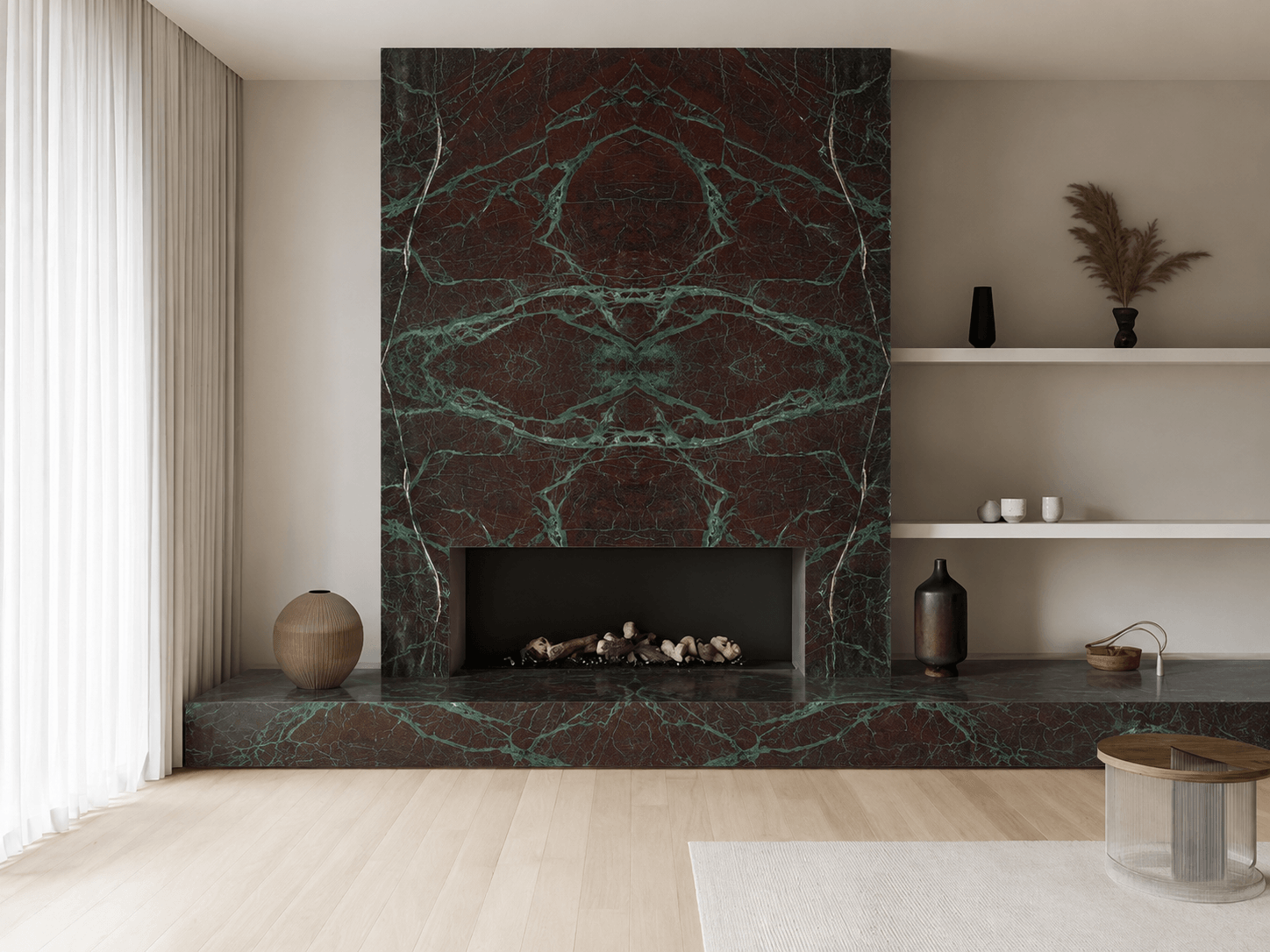
Natural stone and sustainability: what’s the truth?

Sustainability requires more than good intentions

Sustainability is everywhere today. But beyond good intentions, we need data, consistency and long-term vision.

When it comes to materials for interiors or architecture, a green claim or a certification isn’t enough—you need to evaluate the full life cycle.

A material that already exists

Stone already exists. It doesn’t need to be synthesized or molded. It’s not the result of a chemical or industrial process. It’s a naturally formed material that simply needs to be extracted and mechanically processed.

This means that, compared to many alternative materials, its initial carbon footprint is significantly lower.

Credits: Image credits belong to their respective owners

Technology to reduce waste

In recent years, the stone industry has made major progress in maximizing quarry yield and minimizing waste during processing.

Advanced technologies help make production more efficient and less impactful:

– block insulation to preserve compactness and avoid breakage

– mesh and resin reinforcement for fragile slabs

– diamond multiwire saws to optimize cutting and reduce waste.

Credits: Matteo Bianchessi

Durability and lifecycle

Many materials are labeled sustainable just because they are recyclable. But stone is naturally durable.

LCA studies show that natural stone can have up to half the carbon footprint of synthetic alternatives.

And contrary to popular belief, transoceanic transport only has a marginal impact on overall emissions.

Thoughtful sustainability

Of course, a responsible supply chain and efficient logistics are key.

But when selected and used properly, natural stone is one of the most sustainable options available today.

Not everything natural is automatically sustainable. But natural stone, when well thought through, truly can be.

Credits: Luca Morandini