Traditional surface finishes on natural stone

The language of the surface

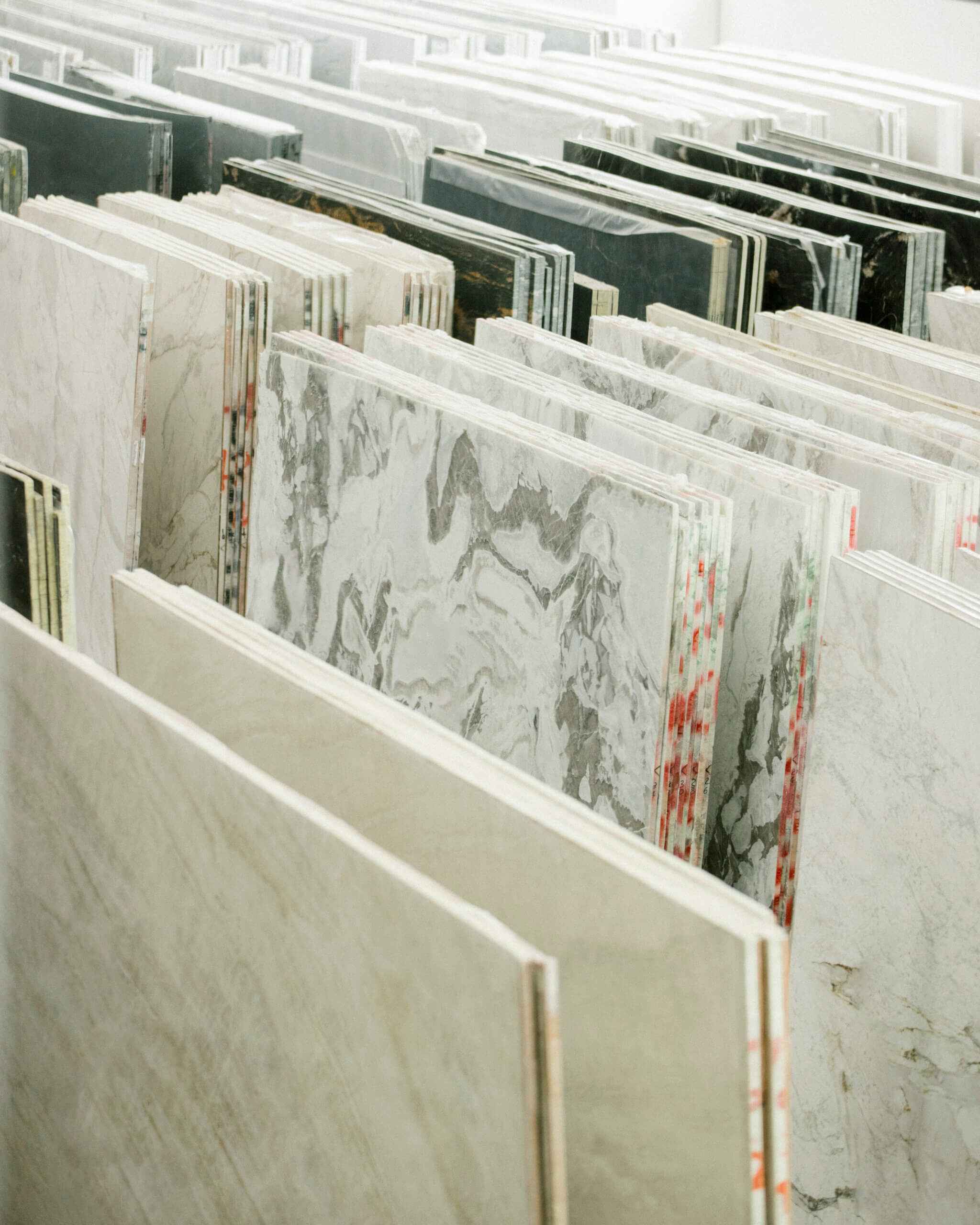
Traditional finishes are the basic surface treatments applied to natural stone to define its texture, appearance and surface behaviour. Through industrial processes acting on the surface, they modify visual perception, tactile feel and the way the material performs within the project.

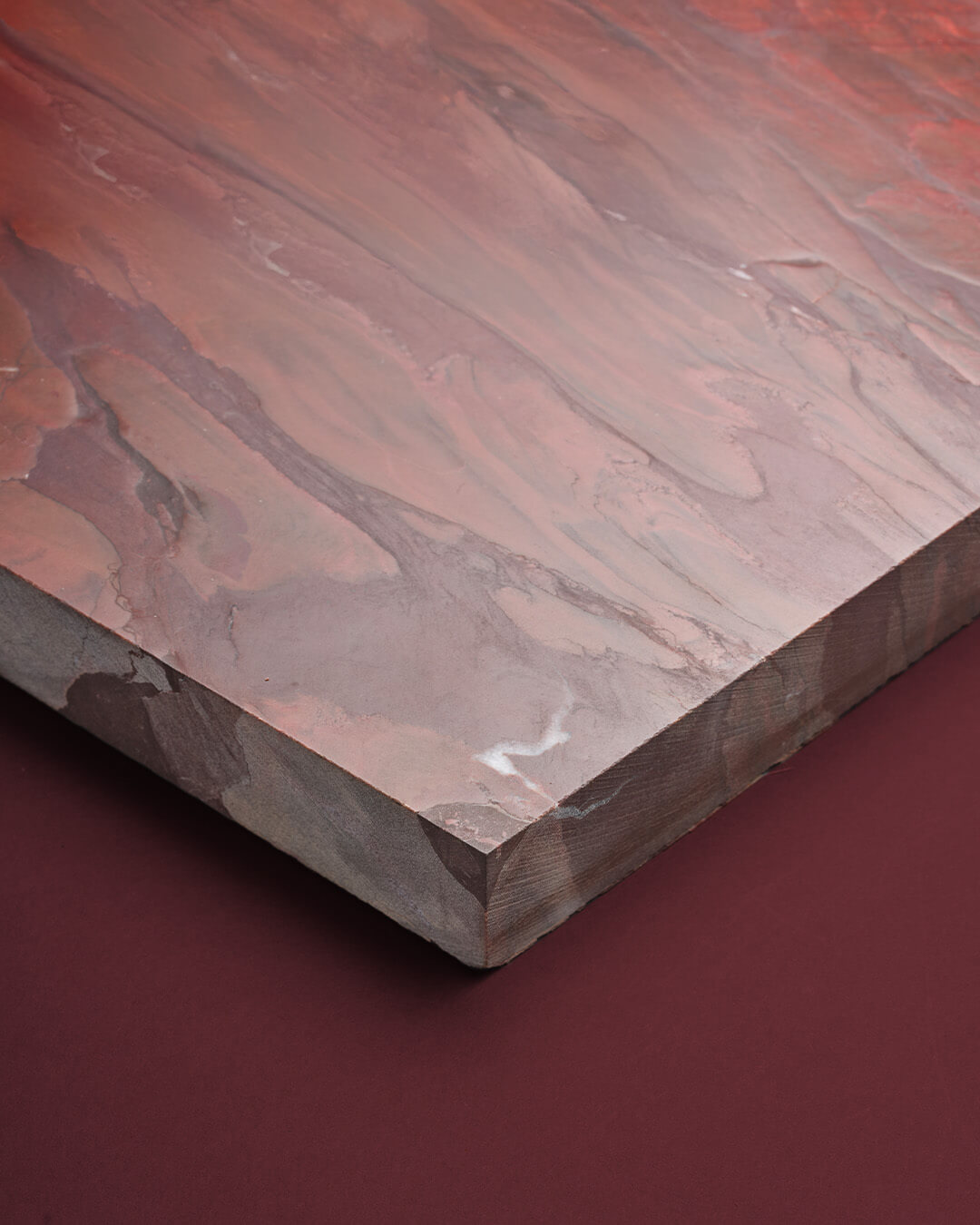
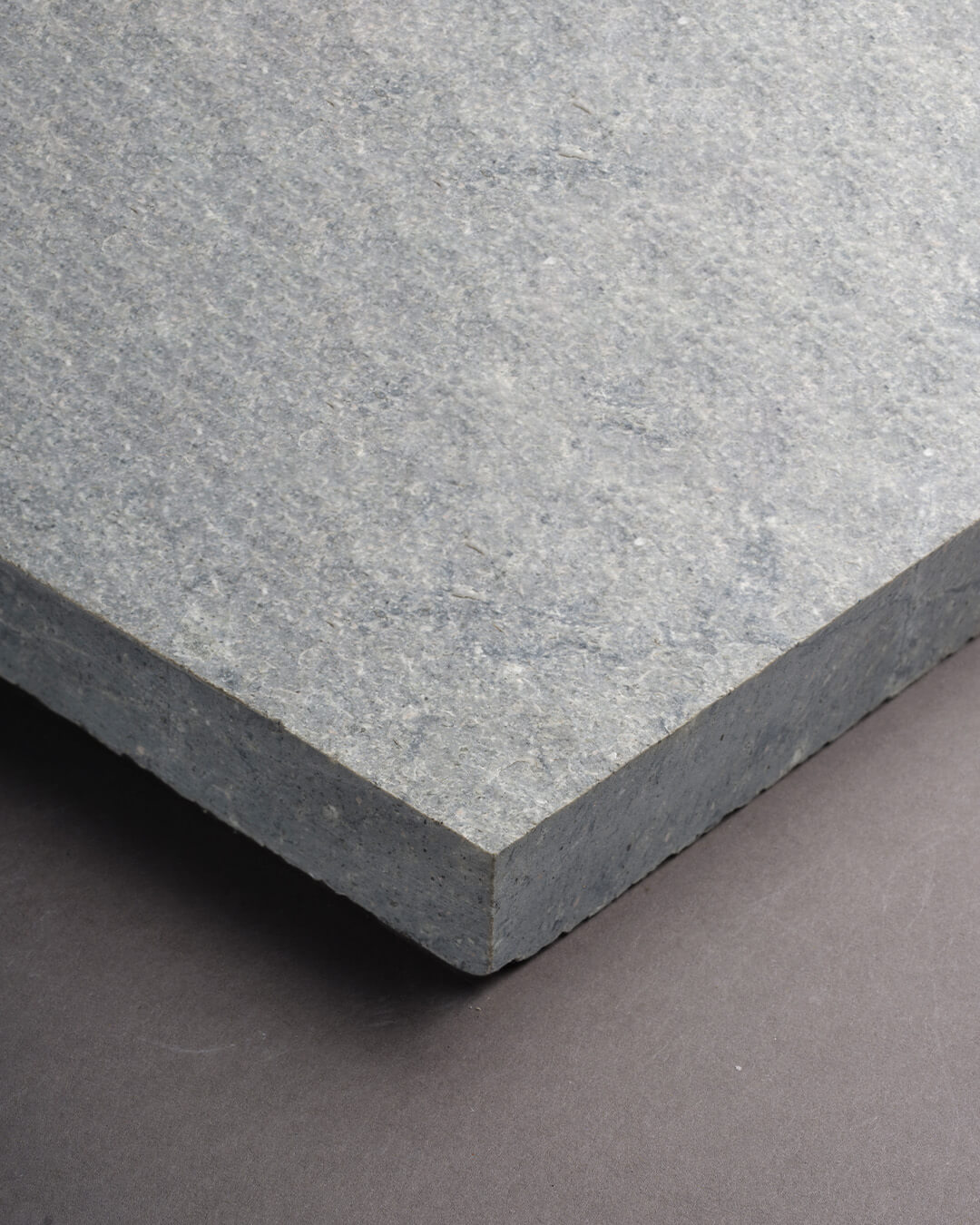
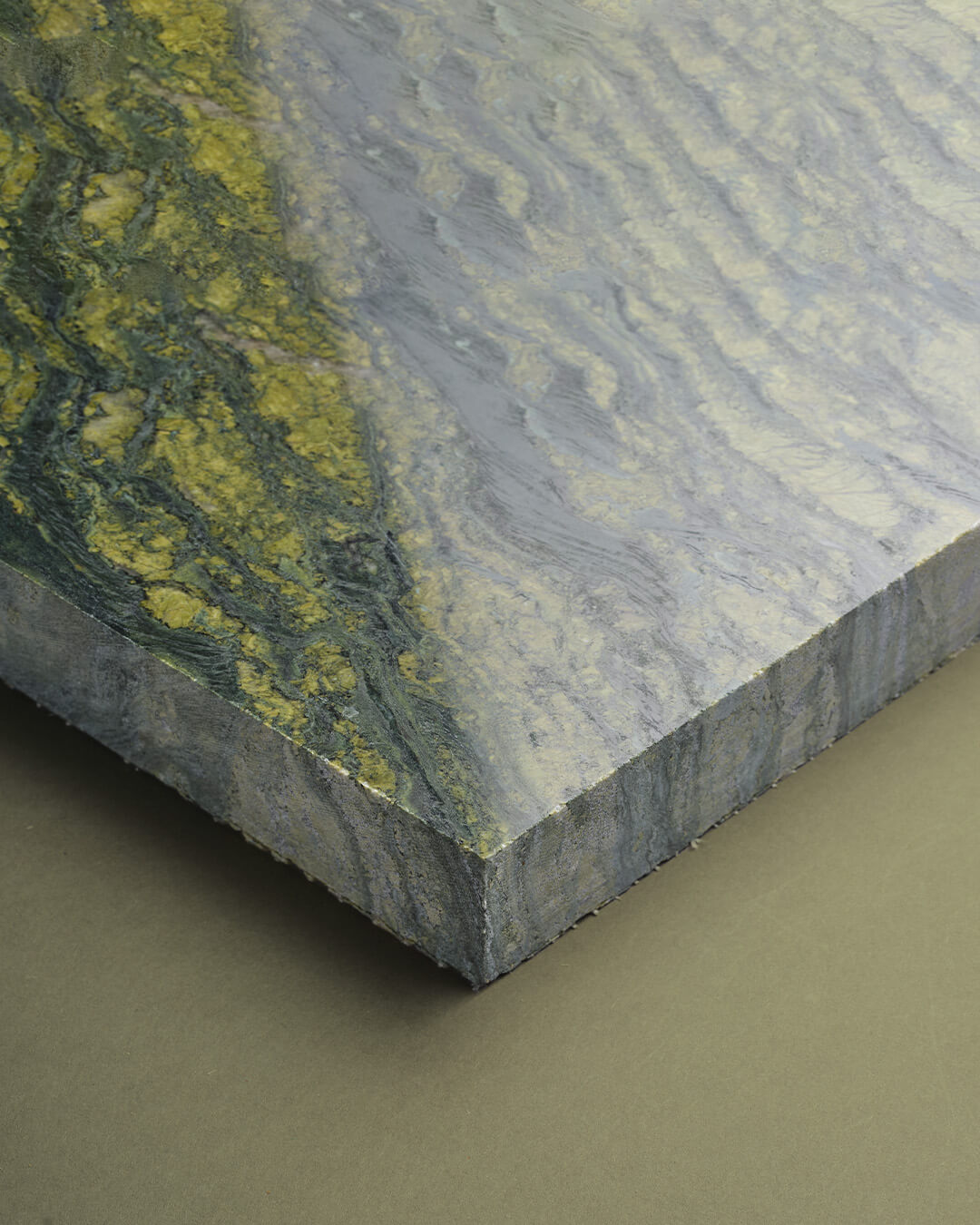
Many of these finishes can be adjusted in intensity, producing more or less pronounced results according to aesthetic and technical needs. Each stone type reacts differently: mineral composition, veining and structure create unique outcomes, especially with more textured finishes such as satin finish, flaming, sandblasting and brushing.

Credits: Luca Morandini
Polishing

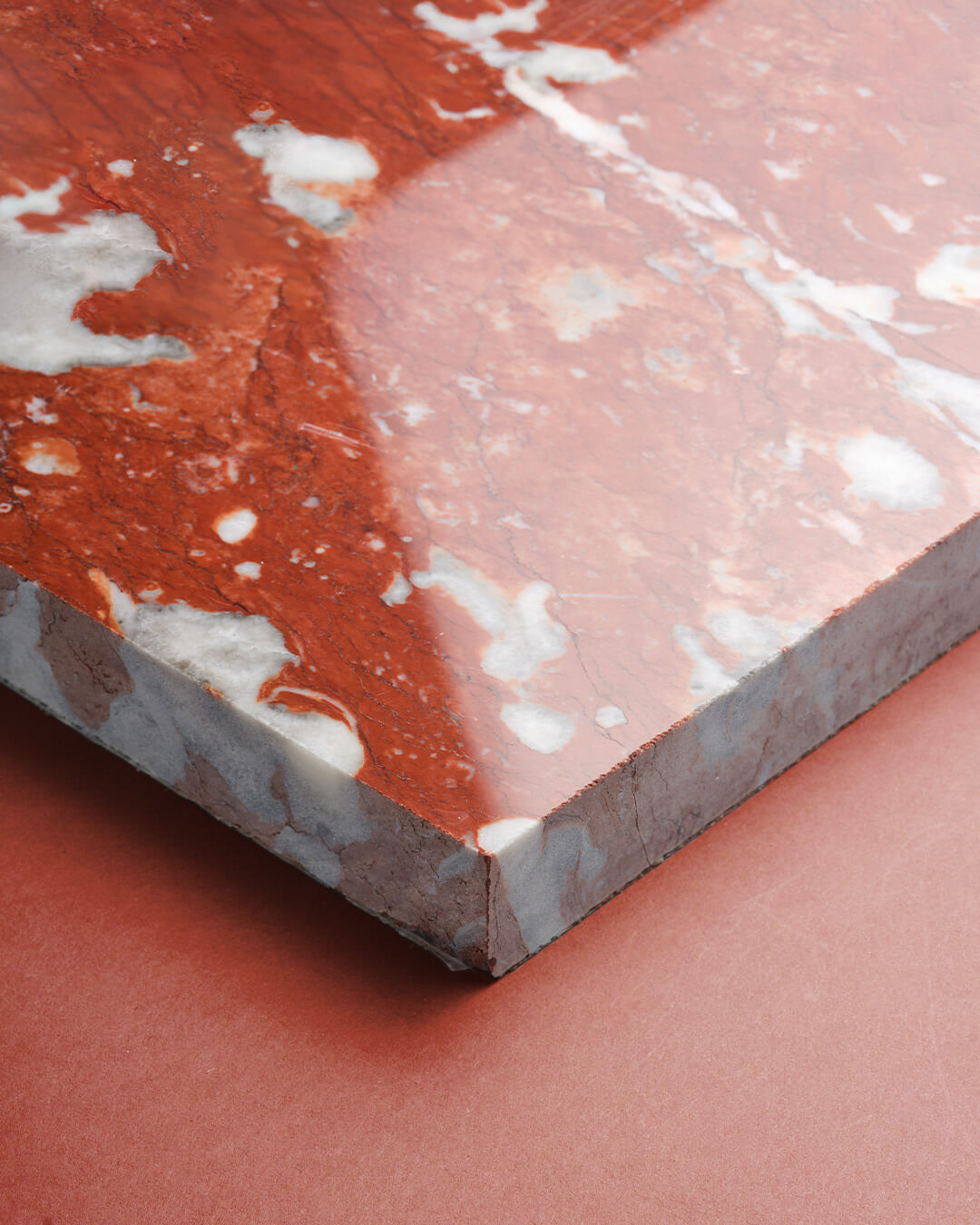
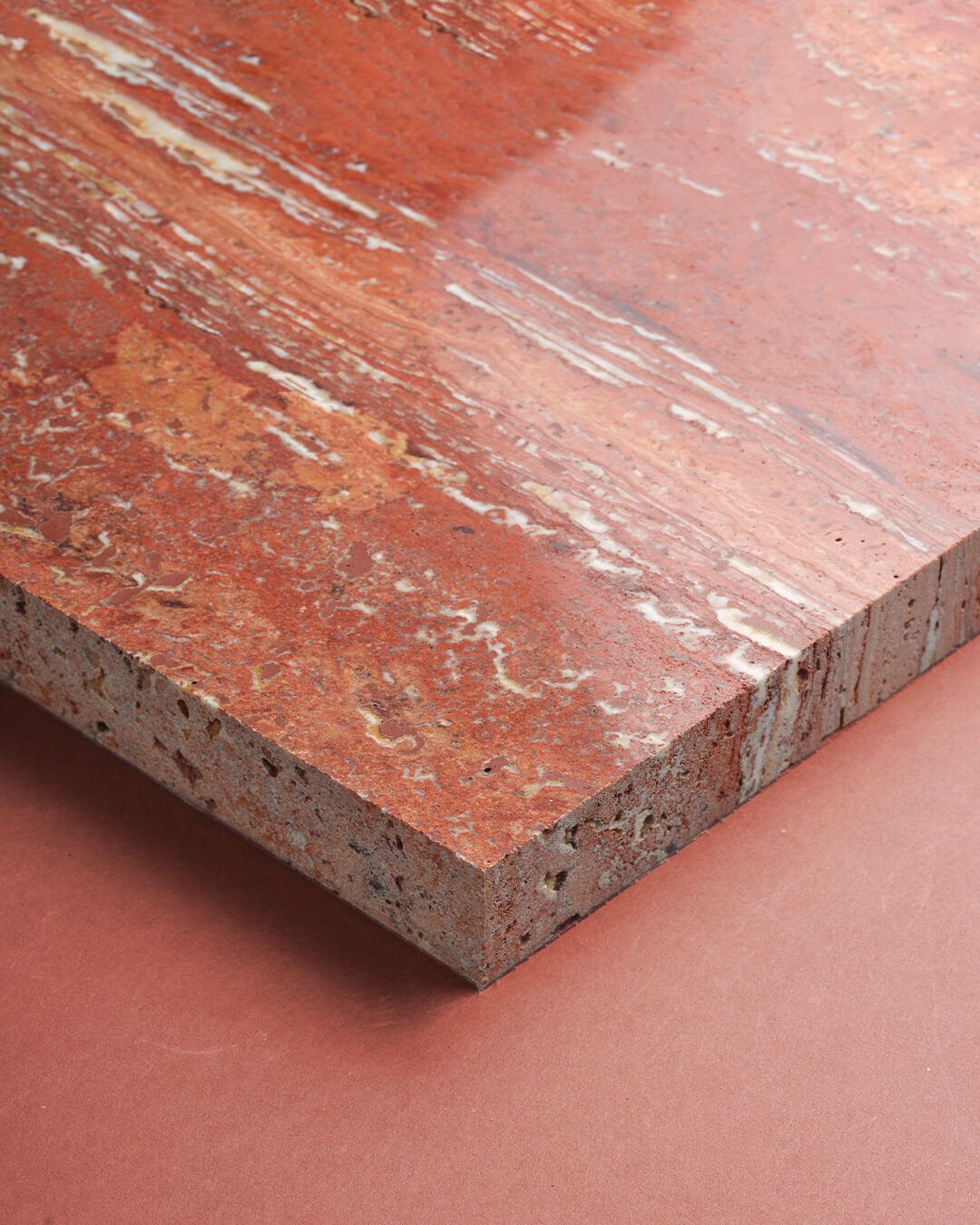
Polishing creates a perfectly smooth and highly reflective surface, capable of clearly mirroring light. It is obtained through a sequence of progressively finer abrasions that almost completely close the micro-porosity of the material.

This finish is ideal when aiming for a classic and luxurious aesthetic, with strong colour depth and maximum brilliance. Because the surface is very compact, it tends to require more careful maintenance than more matte finishes.

Honing

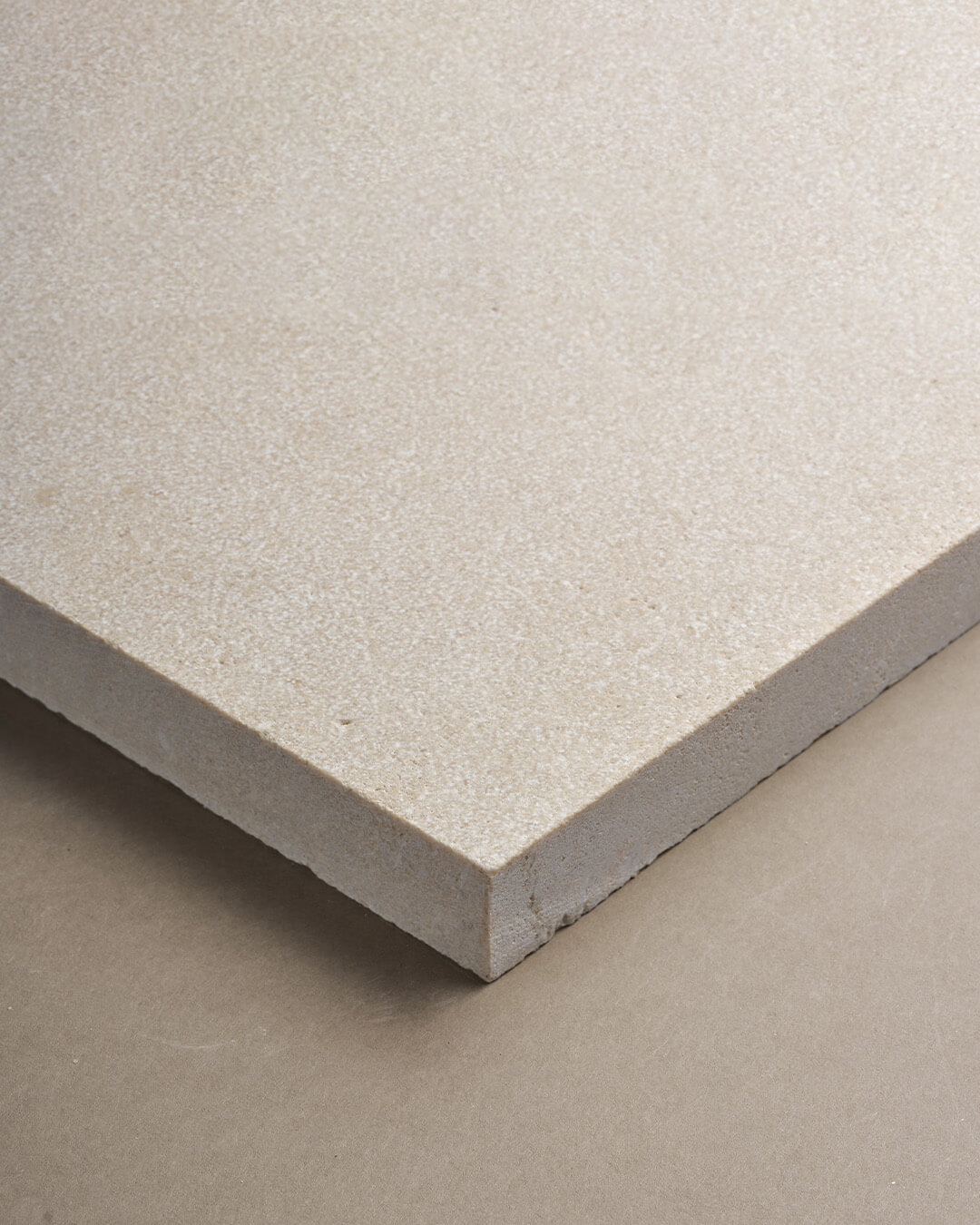
Honing produces a smooth but matte surface, obtained through uniform abrasion without the final steps that would lead to full polishing. The material keeps a clean reading, with diffused reflections and a more natural look.

It is well suited to contemporary aesthetics, where uniformity and controlled light are preferred over a mirror effect. Maintenance is generally simple and stable over time.

Satin finish

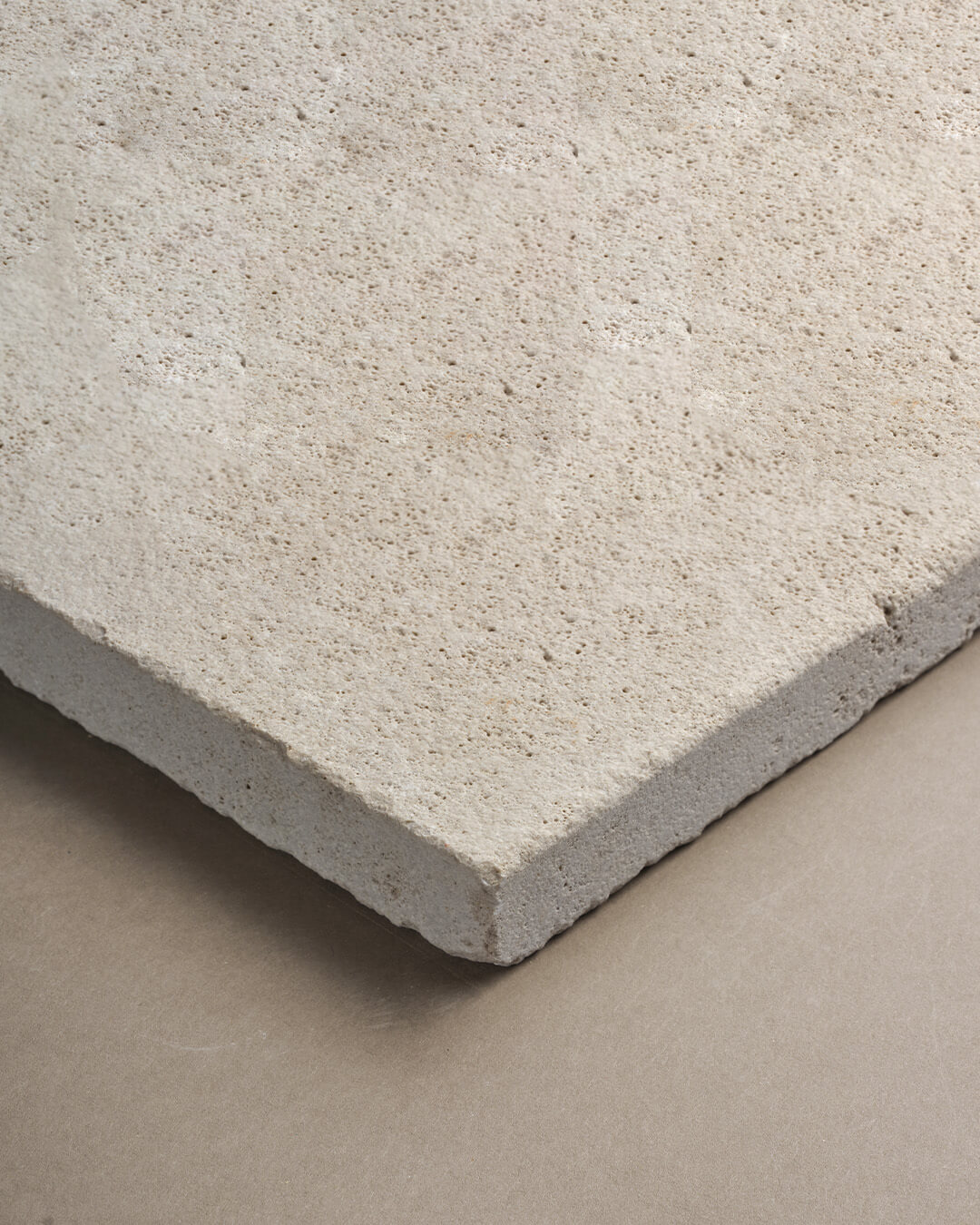
The satin finish creates a velvety and tactile surface, with light micro-corrugation perceived both visually and to the touch. It is obtained through mechanical compression that modifies the outer layer of the stone and enhances its material character.

It is one of the most appreciated finishes to give stone a soft, contemporary character, especially in environments where it interacts with other natural surfaces. Maintenance is usually easy, and the texture helps maintain a consistent appearance

Flaming

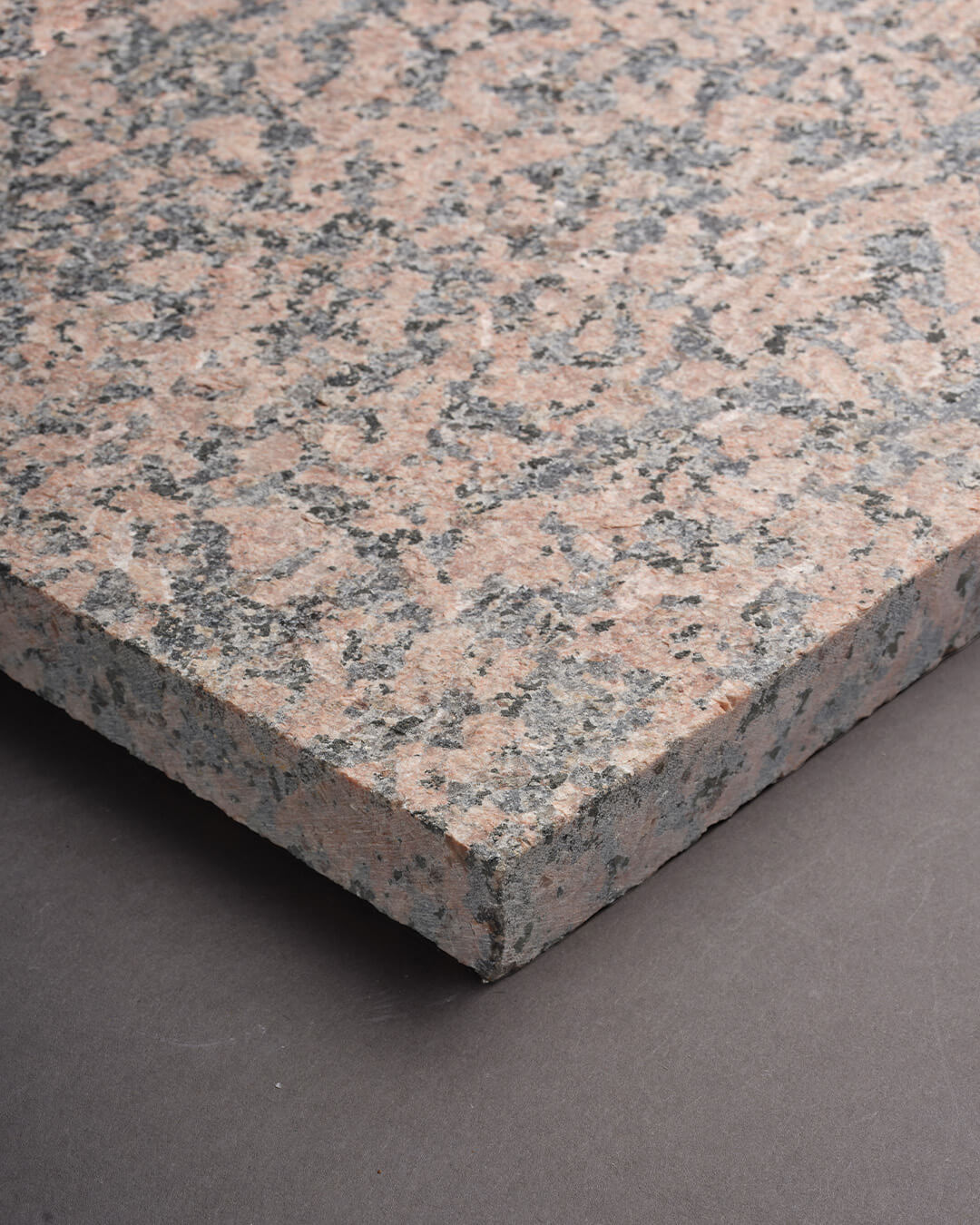
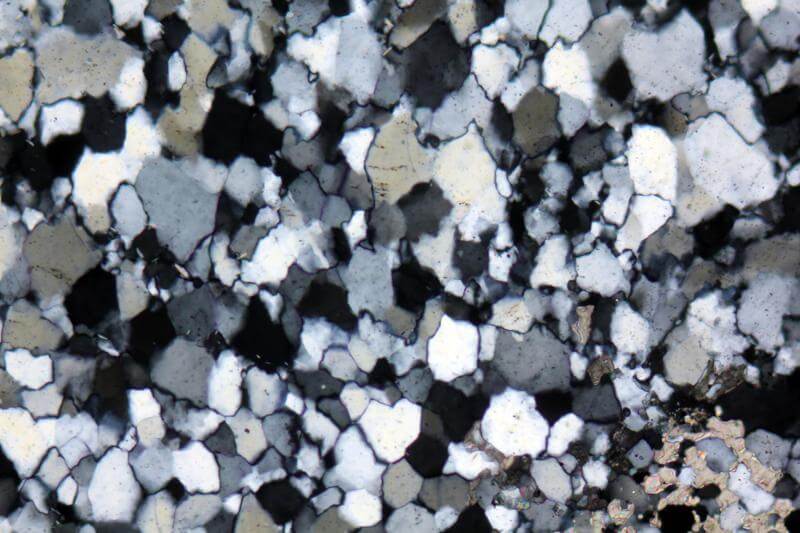
Flaming produces a strongly textured and rough surface by applying a high-temperature flame that causes micro-explosions in the silica-bearing crystals of suitable stones. The result is a pronounced technical look with a very tactile character.

Flaming can be softened through brushing, reducing roughness and making the surface more even to the touch. The combination of flamed plus brushed (often called patinated) provides a more controlled result, suitable even where greater tactile continuity is required, for example on certain horizontal surfaces.

Sandblasting

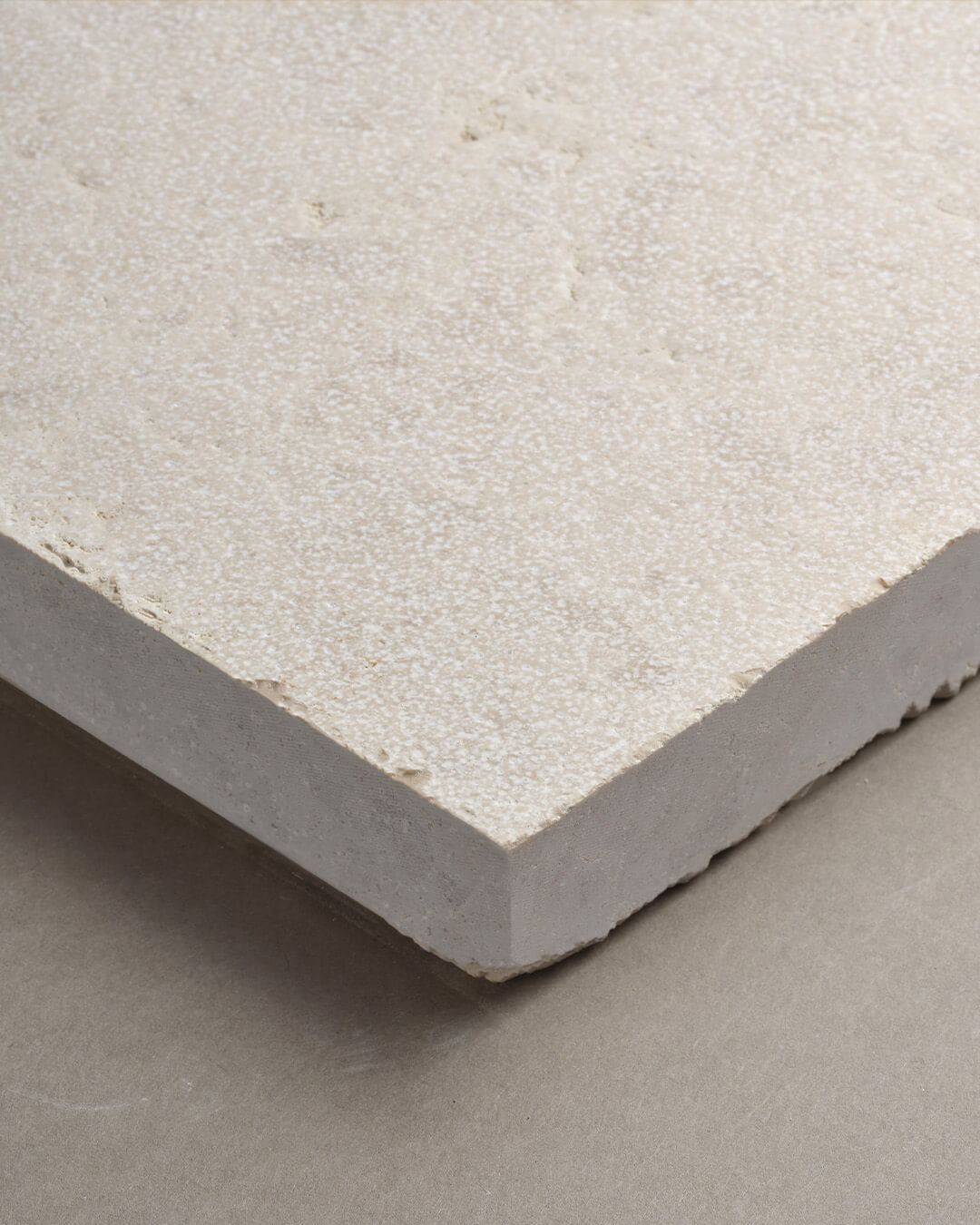
Sandblasting is carried out with a high-pressure jet of water and sand, creating a uniformly rough and matte surface. It is a material finish that can also be used on stones that do not contain silica crystals, such as many marbles.

Compared to flaming, it tends to maintain truer and less desaturated colours, preserving the original shade of the stone more effectively. As with flaming, sandblasting can be modulated through brushing, resulting in a less aggressive and more pleasant texture to the touch.

Brushing

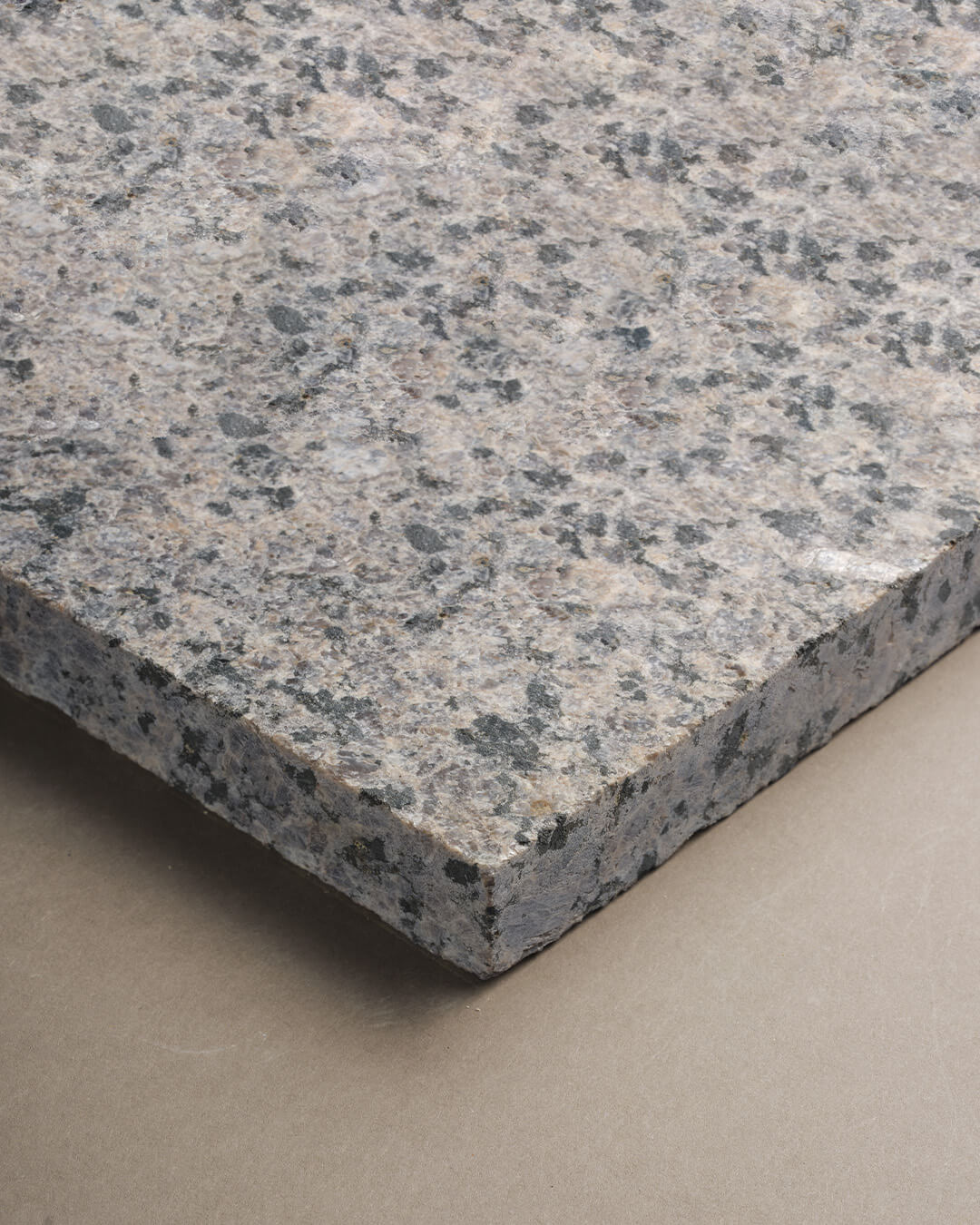
Brushing uses abrasive brushes that selectively remove the softer parts of the material, generating a textured, tactile and natural-looking surface.

It conveys a warm, material feeling and is often used to soften more intense finishes such as flaming and sandblasting, reducing roughness. The intensity of brushing can be adjusted, from very light to more pronounced, depending on the desired character.

Micro-bush-hammering

Micro-bush-hammering produces a fine and regular dotted pattern, creating a compact, technical and controlled texture, softer than traditional bush-hammering.

It gives the stone a distinctive yet orderly appearance, while preserving a strong material component.

Grouting

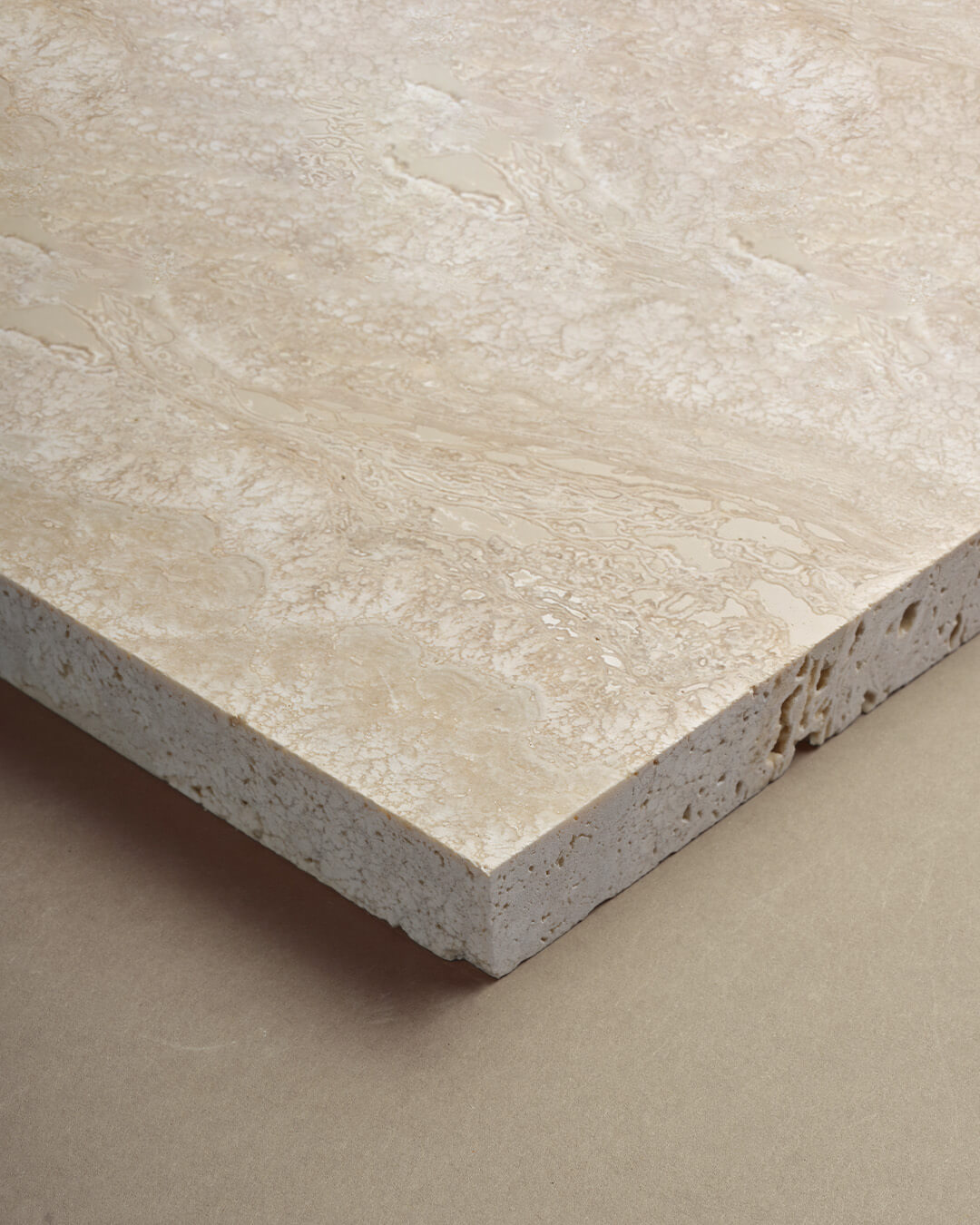
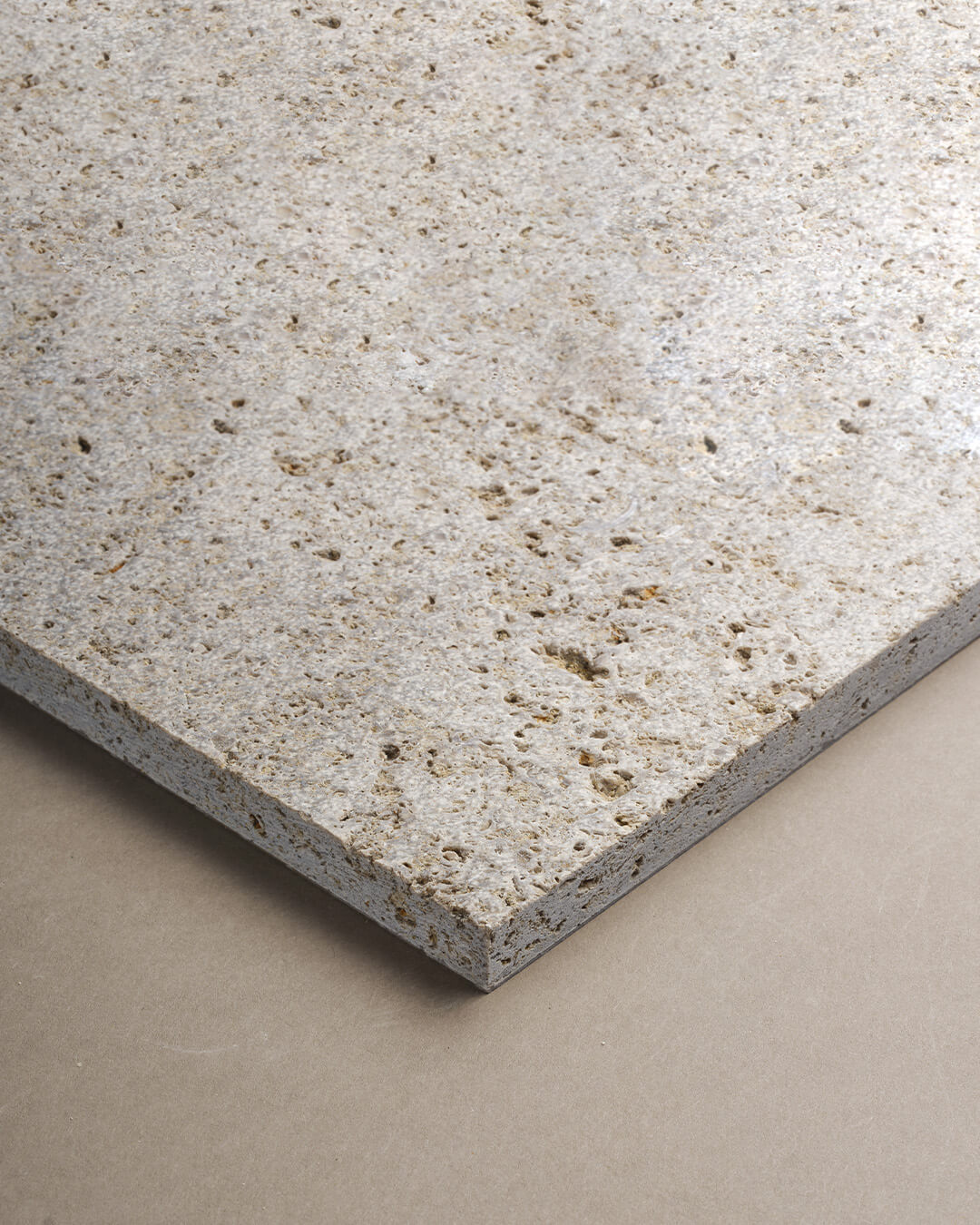
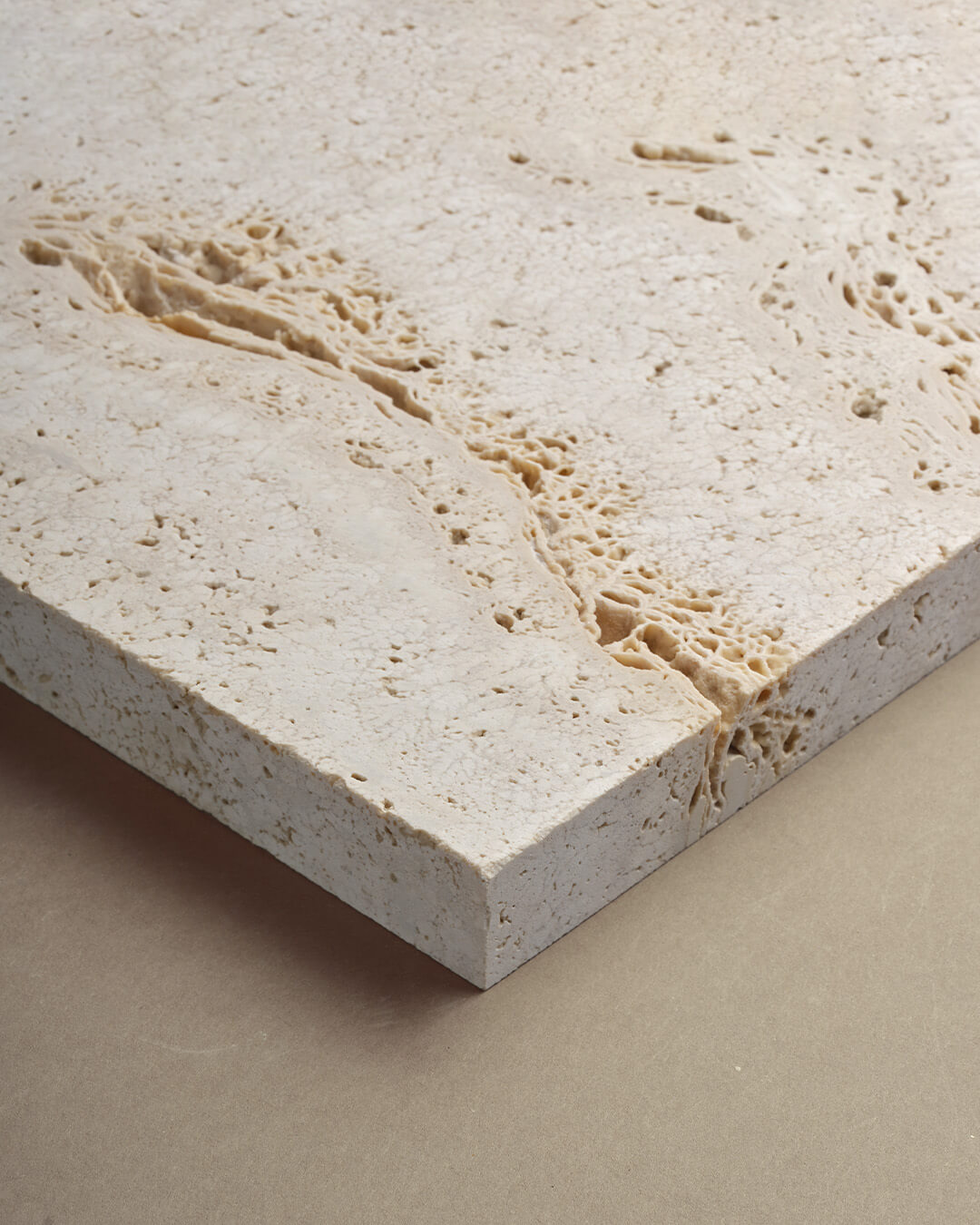
Grouting is a complementary process used to close the natural pores of certain stones, such as travertines, providing visual continuity and a more even, controlled surface. It can be carried out using cement-based or resin-based products, selected according to the stone type and the desired effect.

The colour of the grout may be matched to blend with the stone or intentionally contrasted, subtly influencing the aesthetic identity of the material without altering its intrinsic nature. In some cases it is essential; in others it becomes a design choice that helps define the final character of the slab.

After grouting, a final surface finish such as polishing, honing or satin finishing must always be applied to unify the surface and determine the material’s final appearance.

The art of shaping matter

Traditional finishes form the basis of surface treatments applied to natural stone. Even though they are standardised industrial processes, they offer a wide margin of customisation thanks to the ability to adjust intensity and to the different way each material responds.

Understanding how each stone reacts to different finishes makes it possible to design surfaces that are coherent, functional and consistent with the character of the material, turning finishing into a true design tool.