Knowing Marble

Marble: timeless natural elegance

A material rich in history and identity, marble remains one of the most celebrated choices in contemporary interior design. Its natural brightness, distinctive veining and wide colour range allow it to combine refinement and expressive character, bringing authenticity and material depth to any project.

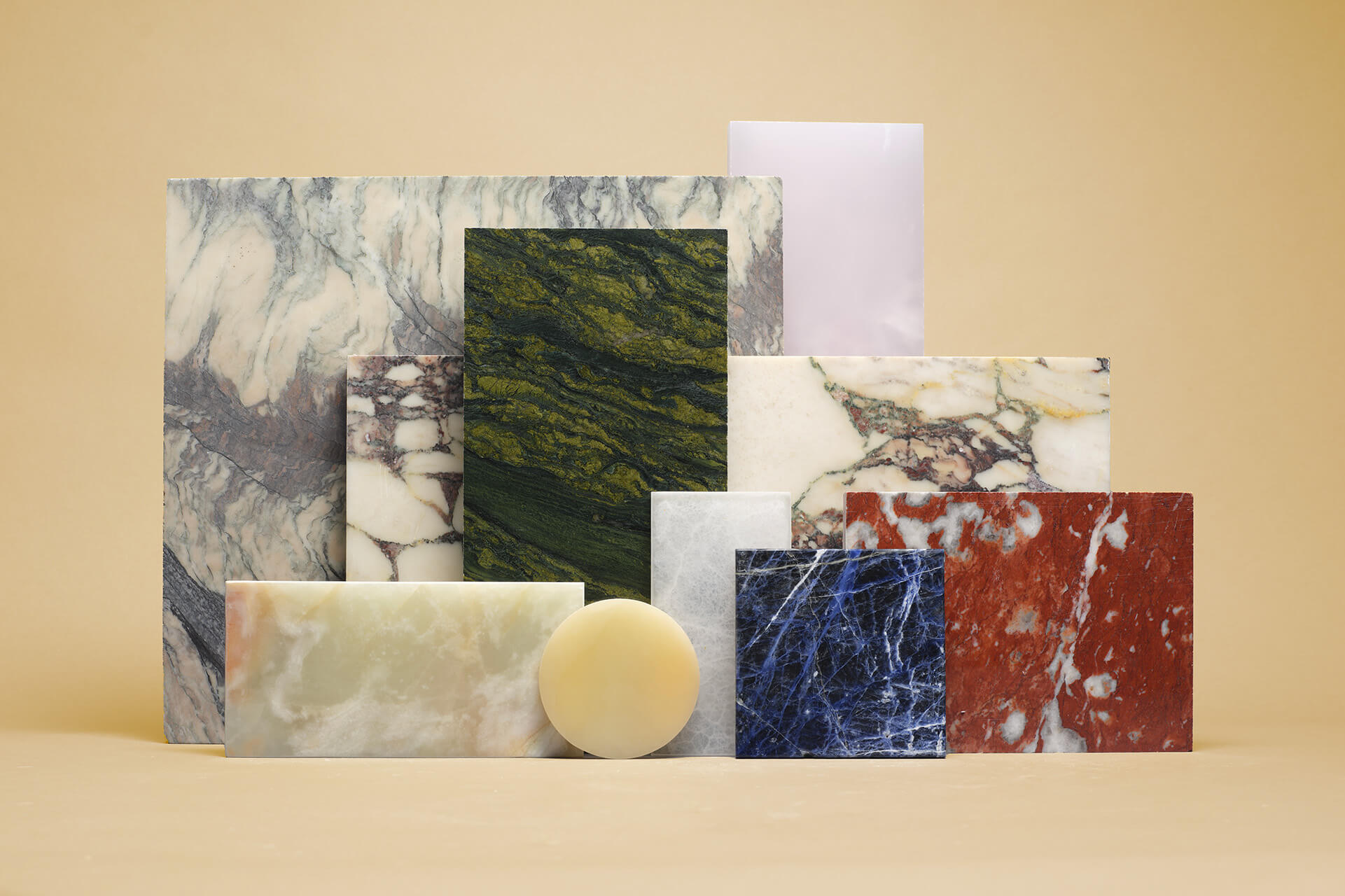
Emperador Dark, Golden Lighting, Bianco Carrara Statuarietto, Wenghe Bordeaux

Origin and identity of the material

Marble is a metamorphic rock created by the transformation of limestone under heat and pressure. This process reorganizes the original minerals and gives rise to a compact, luminous stone characterized by its classic crystalline structure.
The main production areas are located in Italy, Greece, Turkey, Spain, India and Vietnam, each offering recognizable varieties defined by color, veining and uniformity. A symbol of elegance and tradition, marble is widely used in contemporary interior design for its unique aesthetic identity and its ability to convey balance and sophistication.

Morphological and mineralogical characteristics

Marble is composed mainly of calcite, with variable presence of accessory minerals such as dolomite, quartz, mica and metal oxides. These elements determine the color, veining and texture of the material.
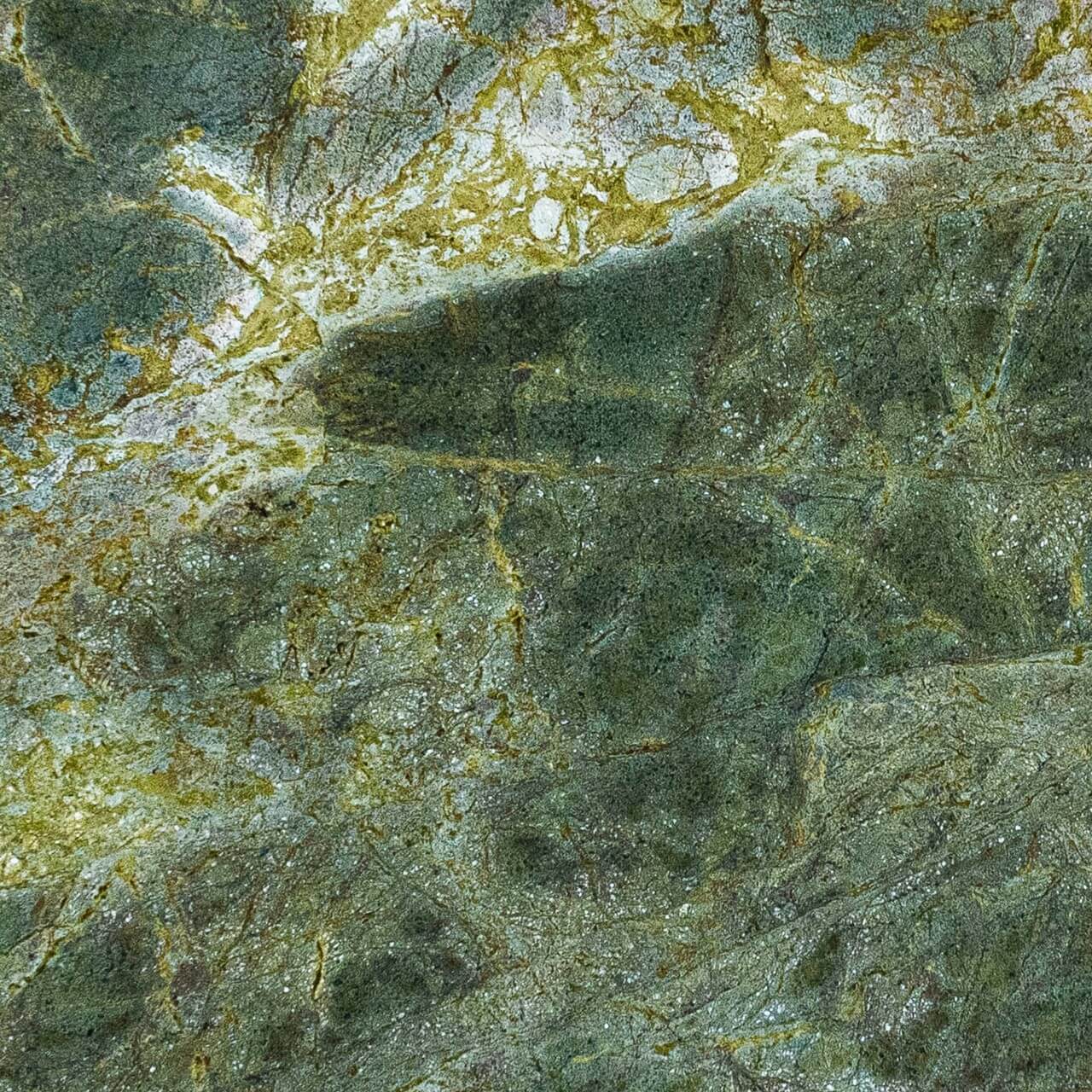
The texture may be uniform as in Bianco Carrara or strongly veined, as seen in Statuario or Calacatta. Other varieties feature inclusions and waves, generating more dynamic patterns, such as in Arabescato. The color range is broad: iconic whites, soft greys and ivories, deep greens, reds, jet blacks, and rarer stones with golden or violet nuances. Marble is therefore a highly expressive stone, offering both subtle and scenic design solutions depending on the selected variety.

Credits: Christoph Philadelphia

Technical properties and applications

Compared to harder rocks such as granite and quartzite, marble is a softer and more delicate stone, with greater sensitivity to scratches, abrasion and acidic substances. This does not limit its use, but requires appropriate material selection and awareness of the application context.
Marble is ideal for wall cladding, indoor flooring, bathroom surfaces, furnishing elements and decorative applications, where it can fully express its aesthetic value. For more demanding uses, such as kitchen countertops, it is essential to evaluate the porosity, acid resistance, and the efficacy of protective treatments.
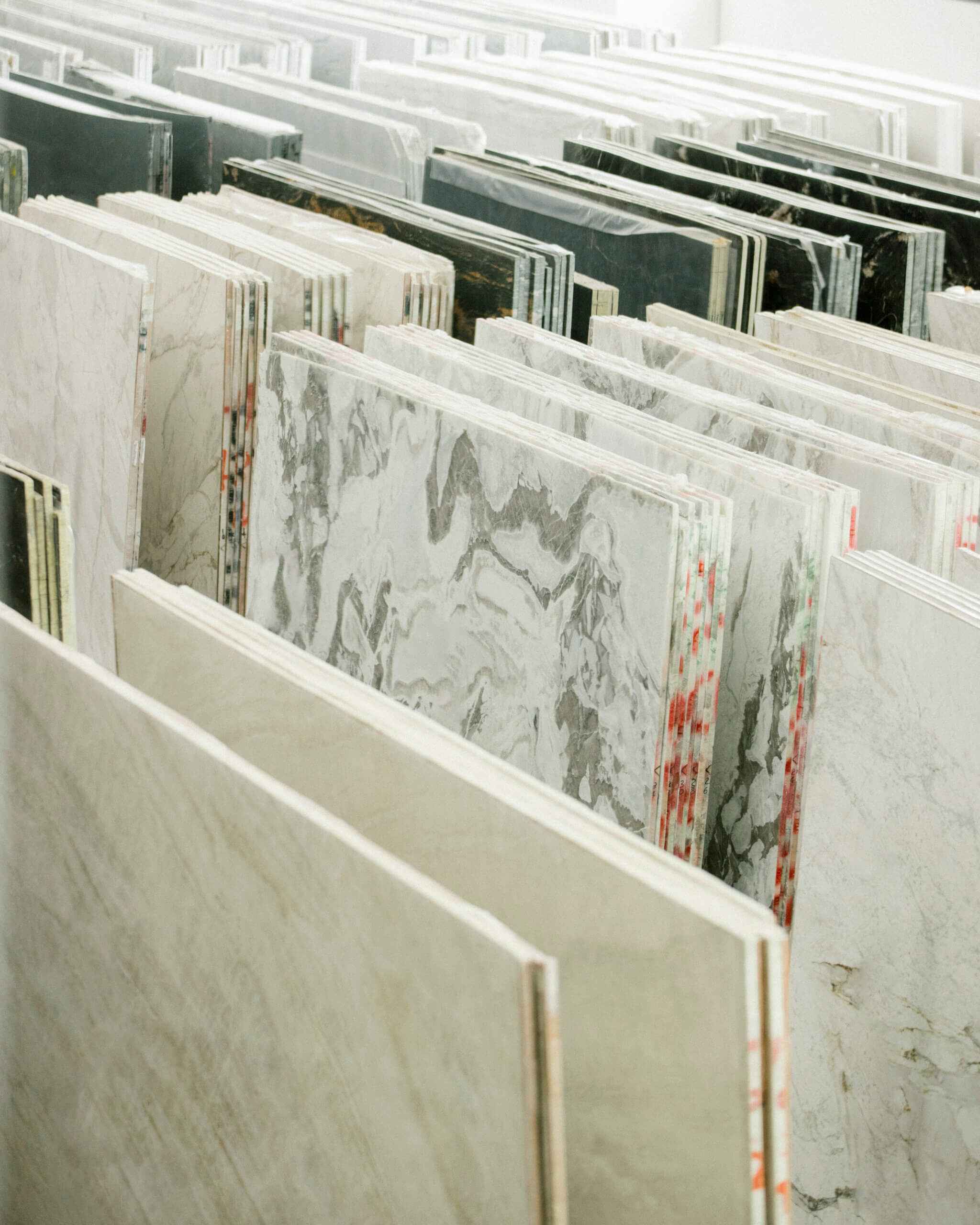
Marble processing requires specific expertise: the stone reacts differently depending on the direction of the vein and may require resining to improve the compactness of the block or slab.

To explore how marble performs in real spaces, discover one of our recent projects.

Maintenance and recommendations

Marble requires careful and regular maintenance to preserve its aesthetic value over time. Daily cleaning should be performed with neutral detergents, avoiding acids (such as lemon or vinegar), limescale removers, and aggressive solvents.
To prevent stains and absorption, it is fundamental to apply a high-quality hydro-oil-repellent treatment, to be renewed periodically depending on use. It is recommended to dry immediately any pigmented or acidic liquids and to use coasters, mats or cutting boards to avoid direct contact with the surface. To explore practical solutions, consult the guides dedicated to stain removal and stone care treatments.

Credits: Matteo Bianchessi

The character of the stone

Marble is one of the most iconic and recognizable natural stones, capable of adding elegance to any space. A material rich in history, it interprets interior projects with refinement and visual depth, thanks to the variety of its veins and the intrinsic radiance of its structure. It is the ideal choice for those who seek authentic, natural and timeless beauty, embracing its delicacy as an essential part of its charm.